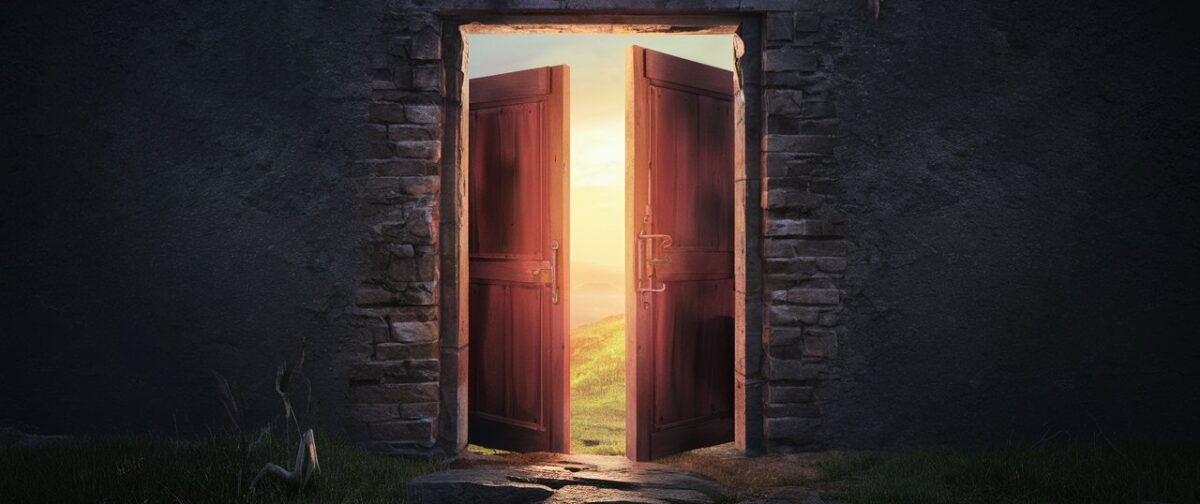
When The World from Under Rebels (A Short Story)

Photo Credit: NAT

Every several years, the moon successfully ascends to dethrone the sun. That is when the worlds invert, and night invades the day. 

The moon absorbs all the dead spirits that fall down into the underworld. This gives them a home while the courts of the sun prepare for their trial at its appointed time so that these ghosts don’t muck up the earth too much. Every night, the earth flips over, facing the moon, allowing some of the spirits to transcend to the world and find their kin or take care of some unfinished business. 

But this is not always enough. Every once in a while a contingency of the moon ghosts make a climb up to the heavens during the day to supplant the sun and finish its job filtering ghosts from the earth. We call these an eclipse. 

The moon turns the earth into night. The animals know what is about to happen and freak out in horror. The humans, mesmerized, simply stare up at the sun. 

Like bats, thousands of spirits pour out from the moon and make their initial jump into the earth. You can hear their strange whoosh in the air all around. They take the spirits of the most persistent ghosts who refuse to sink down and join them below. 

They can only hold back the sun for a few minutes, though, and eventually, the sun throws them back down. These ghost soldiers know this and go straight after the ghosts they are set to capture to bind them up. Some soldier ghosts, though, once free secretly remain on the earth, often the first deserters to be sought after next time around. 

Through all of this, they cleanse the earth of the spirits of old, that is until more spirits can accumulate. The earth’s environment must adjust to having no spirits. You’d think this would produce consistency, but our ecology systems were built around the presence of these ghosts and spend the next several days readjusting. Eventually, however, it instills a brighter world until too many spirits accumulate again, and another cleansing is needed.

Time with the Glaciers of Patagonia: Finding Humanity’s Place in Nature’s Power and Majesty

Visiting Perito Moreno Glacier in Los Glaciares National Park, I was struck by how interesting I find glaciers. They remind me of nature’s majesty and subtly. Millions of bits of snow and ice slowly pack one by one until they become a landscape-shaping force. Even through nature’s slow, subtle works, all-inspiring entities emerge. Glaciers go on to reshape the landscape around them. 

Every few minutes, its mass creaks with white thunder and whole towers of ice fall into the water, demonstrating how the glacier’s powerful yet slow flow builds overtime. A glacier can seem like a static entity, but the entire walls of ice falling out of nowhere into the lake below challenge this assumption. They really flow very, very slowly as they slide down the mountains. All that pressure eventually causes the ice at the very bottom to snap off. The ear-cracking thunder removes any notion other than that these glaciers are powerful forces working their way through the valley they inhabit. 

In Torres del Paine National park, I hiked within the dusty leftover basis on the retreating Grey Glacier. Glaciers move tons of earth and leave the lakes, rivers, fjords, islands, moraines, and much more in their wake. For example, massive glaciers during the Ice Age produced or reformed Long Island and most of New York City, and significantly reshaped the Eastern United States. 

Seeing towering walls of ice the size of skyscrapers fall suddenly into the water, humanity’s contribution to the world looks small in comparison. Natural entities like glaciers that are bigger, bolder, and older than us emerge naturally.. We can only experience the eons of time glaciers have existed in the ways they mold the landscapes around them. 

At the same time, humans have had a pretty significant impact on the glaciers. Climate change is slowly melting many glaciers around the world, piece by piece. Our decisions too can accumulate into massive impacts on the landscapes around us. 

Nevertheless, this glacier is still here. No matter what humans do to it, we can never get rid of the impacts its ice has had on the landscape. Maybe this will be the route of humanity as well: slowly creep into a massive force that slowly wither as well once we reach our zenith until we dissipate out leaving an impact on the landscape around us. Specific societies will most likely go that kind of route: wither until it becomes unrecognizable as it transitions into whatever comes next. 

Nature produces massive emergent forces like glaciers and humanity, and those same patterns of physics will eventually take them away. Our lives will most likely only ever be one towering column of ice in nature’s system that also eventually falls into the water below.