What Even Is a Haiku?

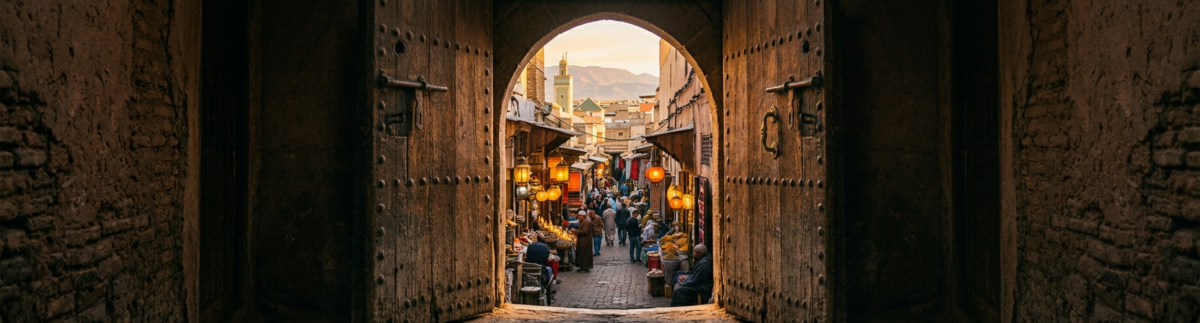
Photo Credit: Nicolas Messifet

This is a surprisingly complex, debated question. Many English speakers may see a haiku as a three line poem that follows a 5-7-5 syllable structure, and that’s basically it. Teachers have drilled that into us as children. 

This interpretation of syllable counts is at best an attempt to approximate Japanese conceptions of haikus in their own language, and this is not the definition most professional English-language haiku writers seem to use. For starters, the Japanese concept of “on” that English speakers translate into “syllables” seems a bit more complicated. Haikus in Japan were a genre of poetry, and like all genres, it evolved over time. But when writers write haikus in English, even if they claim to be basing their work on this tradition, they are really doing something entirely different. 

I see my own haikus as a cultural US piece of literature rooted in my own American cultural context. How people in the US thought about Japanese haikus has its own history, largely based on US culture and how people in the United States interpreted Japanese society and literature. I started writing a haiku a day, not because of any affinity with Japanese culture but because the poetry style seemed short and easy to write every single day. 

I am also very loose in what constitutes a haiku and what topics I could discuss. I almost always followed the structure of a 5-7-5 syllable three-line stanza (except in some cases where we intentionally broke it) because that constraint gave me friction against which I could be creative. 

Some in the United States view haikus – or at least the original Japanese concept of the word – as having certain themes or stylistic features: thematically focusing on nature, having at least one piece of seasonal imagery, possessing a “cut word”, for some employing a certain broader distant vantage point, and so on (for example, see https://www.writersdigest.com/write-better-poetry/senryu-poetic-forms). These are fine conventions, but I generally did not follow them. I allowed my haikus to be just about anything, whether that be the act of writing a haiku itself or a frustration I felt that day. In a few cases, I did happen to write about nature, but that was the exception, not the rule. 

This reflects one of the fundamental tensions I see on how English-speaking poets conceive of the genre of “haiku” as a whole. Some English haiku writers see themselves as continuing in the “Japanese tradition” (or traditions) of what a haiku is, adapting those practices to a new language and cultural context, maybe refining some of the details on their way. These are more likely to desire a strict syllable count and maybe thematic attachments to nature and other common “traditional” haiku conventions. Others see the haiku writing process as a type of stepping stone for developing their own forms of poetic art. 

If this were a spectrum, we would fall much more on the latter side. On a practical level, we often talked about societal themes given how passionate both of us are for those topics, which may, for a traditionalist, fall closer to the Japanese senryu tradition than haikus (although I don’t think we happened to follow that tradition strictly either). 

At the same time, many English-speaking poets with a looser sense of what constitutes a haiku follow strict syllable counts – often making their haikus 2 or 4 lines or some other number of lines long – or use haikus for purposes substantially different from what the traditionalists might view haikus. On a practical level, I found the 5-7-5 syllable constraint useful to both channel my thoughts and force me to improve our writing, thus almost always abiding by it. 

I think most English poets who try to write haikus too easily think of themselves as continuing a Japanese tradition they are not a part of. Words and ideas travel across cultural contexts, changing in the process. We should accept this. When I, at least, write a haiku, I am doing something fundamentally different from what Matsuo Bashō or Yosa Buson centuries ago in Japan. Yes, we call them “haikus,” a word that happens to come from a similar word for what they used to describe their own work but transformed as it became a part of the English lexicon. What they wrote was fascinating; don’t get me wrong, but what I do when I write haikus is still my own personal reflection situated in my own cultural context. 

Is the T-Rex a deux machina at the end of the first movie: A Defense

I have heard others bemoan how the T-Rex shows up randomly at the very end of the first Jurassic Park movie right when the raptors have them cornered. They call her a deux machina, that is a common trope in movies where some big force inescapably arrives at the last moment and saves the day for the characters. 

Whether something is a deux machina is usually subjective, generally labeling something as a  “deux machina” if it goes against their expectations for the story and its themes and thus takes them out of the story. What I find interesting about calling the T-Rex a deux machina is that it really demonstrates the tensions between many viewers’ expectations of the movie as an action film and the fact that Jurassic Park is a really horror film. Based on this, it’s actually the second deux machina that no one talks about that I think breaks the story. 

The major theme of the first Jurassic Park movie is that life/nature always finds a way. Life goes on because individual organisms are able to take advantage of lucky opportunities/breaks that happen to come their way to survive. The ability for particular species to adapt emerges out of this. Through this, life itself continues on, expanding beyond any boundary humans may set for it. For example, being able to make sex changes because of the frog DNA used to make them was a lucky break that allowed the dinosaurs to survive, and the electric outage was another that the T-Rex took advantage of to remake its world. 

With this theme in mind, the characters spend the final act of the movie desperately trying to survive the coming advance of life/nature, specifically the raptors hunting them. The central question is whether they can use their human ingenuity and tools to stop this advancement, and the answer is no. No matter what they do (using a gun, locking the door, escaping through the vent, etc.), the raptors still continue to surround them. It’s all over. That’s when the T-rex comes in, causing the raptors to fight the T-rex, allowing the main cast of characters to escape.  

This moment demonstrates the movie’s central theme about nature. Can they use their ingenuity, skills, and technology as humans to survive against nature’s ascension? No, they are ultimately subject to the whims of nature for their very survival. This conclusion to the fight illustrates the final dominance of nature over humanity. The sudden lucky break the T-Rex presents still reinforces this theme. Their only hope for survival lies in a lucky break presented by nature that they must take advantage of, and they do, using it to flee. Just like every other species, their only hope for survival lies in taking advantage of a lucky break. 

This differs from regular deux machinas. A typical deux machina is a problem because it undermines the story’s themes by providing lucky coincidences or some overly powerful saving character, technology, or other entity as the reason the characters succeed. Did love save the day, or the grit of persevering, or whatever other central theme the story is based on? No, it was the divine superhero who showed up out of nowhere and fixed the problem. Whether the T-Rex came or not, they are completely subject to nature in that final moment. Thus, surviving based on a lucky draw from nature only reinforces that theme. 

The deux machina in the next scene is the bigger problem, since it undermines the theme: the wealthy billionaire somehow arrives outside, with no dinosaurs around, ready with a helicopter to whisk them away to safety. (And for that matter, if he was out there in a car, why didn’t the T-Rex eat him and Malcom in an open convertible before coming into the building? They were easier prey presumably right where the T-Rex was right before.)

The implication of the theme of being subject to the whims of nature is that sure, they survived a few more moments, but they are forever trapped by this new emerging world. The dinosaurs are taking over the island, and outside there are endless more threats for them, whether that be other raptors or some other threat. The best they can hope for are lucky breaks, but you can’t expect that each time. But instead, the billionaire arrives and  magically whisks away to the safe human world far away from this nightmare. 

This gets to the heart of the tension as to what genre this movie is. In the US, people often categorize Jurassic Park as an action movie, and action as a genre tends to run counter to fatalistic themes. Action movies, at their core, center on how humans can develop and use their skills to surmount improbable odds and achieve success. This makes them inherently achievement-oriented, with viewers expecting the main characters to use their grit and skills to win the day. Hence, in such movies, a coincidence or lucky break being what causes success undermines the key theme of action as a genre and hence a deux machina. 

Although officially classified as an action movie, Jurassic Park opposes this common theme of action movies. I would categorize it a horror film, which tend to explore how death is all around us. In the movie, in addition to being awe-inspiring, the natural world produces death. In these movies, survival is the key, but using one’s skills to achieve survival is always how characters survive depending on the film’s themes. 

This reflects one of the major tensions in the movie. It wants to show how we should both marvel and fear nature, but it also wants to give regular people good clean fun. Obviously, it would not be as graphic as some horror films can be given that it was intended to be a family film. That’s fine, but horror films can still explore fatalistic themes in a child-friendly way (just look at the number of horror stories written for children). 

Instead, though, we see the characters whisked off to safety. They wanted viewers to both feel the horror that the characters are now victims of the new natural world they accidentally unleashed but still receive the action-movie catharsis of seeing characters survive this apocalypse and literally fly into the sunset. These contradict each other and make the viewer feel cheated. 

Most viewers blame the T-Rex as the source because they expect the characters will come up with a way to get out of their mess like a typical action hero. But if after the T-Rex accidently saves them, the group were still trapped in this hostile world instead of having the cavalry arrive to pick them up, viewers’ expectations based on action films would be firmly pulled out from underneath them, and they would have to confront the key theme that they are really subject to the whims of nature.