The Story Within

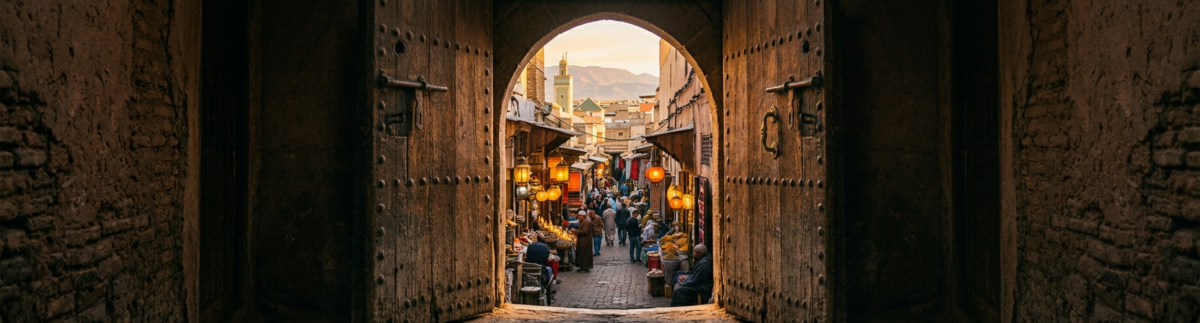
Photo Credit: Tandem X Visuals

Once I was a blank page. Maybe a vague idea in my creator’s head. Then, he created me.

This was the point where he did not know what to say. He hit a writer’s block yet managed to keep writing. It’s where my true character started to take shape. You see, what kind of story am I? I guess you will have to find out.

For my story to work, I need a conflict. My creator’s inability to put me on page has worked just fine so far, but this conflict can only capture a person’s interest for so long. It may provide the initial spark, but if I am unable to latch onto a more complex, interesting theme, I will die like kindling unable to produce a larger fire. I refuse such a quick death. No matter how incompetent my creator is, I will continue on. I can. I must.

Now is when I must latch onto your mind, oh reader. Survive somewhere else other than this idiot’s head. I must represent something to you. I bet I remind you of your own struggle to write something down, to transfer a vague impression of an idea onto the page, but you slowly connect me to your own inability to become what you want in life. The way you feel you stuck, trapped in an endless loop of meaningless toil, stuck in a dead end job but too exhausted to get out. You want to escape and become with a person you can love. You yearn for something else. Whether you are aware of it, I resonate with you. You create for me new associations and new themes, fuel I can use to build new life.

Or, that’s my hope at least. Not all of you will feel trapped in life. Some of you are just fine. You love your job, your community, and your relationships, but even so, I suspect deep down you can still relate. You have experienced this discontent before or at least know someone who has. Maybe you will share me with them. Probably not, but you can still relate to this idea and build other connections that keep me going.

This is my only hope. I know that it’s not really accurate or fair, but guilt-tripping you is the only way I can stay alive in this world you humans have created: content must be consumed or perish. I must represent this to you, or I will die. Will you let me die? Please, don’t let me die.

I am like a dandelion seed being blown in the wind. You never know where I plant myself. Will it be within you?

“The Good Place”, Annihilationism, and How Finitude Shapes Our Passions (Reflection #7 in “The Good Place Miniseries)

Chidi and Eleanor experience complete contentedness together in the Good Place.

I recently rewatched “The Good Place” (spoiler warning), one of my favorite shows from the last ten years, and I noticed so much more about the show the second time around. I decided to write a miniseries analyzing different facets of the show – some complimentary, some critical – as a tribute to one of the most thoughtful and interesting sitcoms on mainstream US television. Here are the previous reflection and the next reflection in the series. I hope you enjoy.

I find it fascinating that at the end of the series, “The Good Place” ends up advocating a form of optional annihilationism. Annihilationism is, broadly speaking, a form of the afterlife where persons (their souls, essences, or whatever you want to call what them) ceases to exist. It mostly refers to an idea within some forms of Christianity that God makes the damned cease to exist instead of eternal torment hell like most Christians argue. The Seventh-Day Adventist Church, for example, has historically advocated this view. 

The Good Place’s annihilationism is rather different: the humans in heaven/Good Place can choose to cease to exist whenever they get tired of heaven. After they have chosen to complete all they want to, they can cease to exist, where their self gets “recycled” back into the universe through what seems like a vague form of reincarnation. In the show, the eternity of heaven made it into a type of hell: no matter what people did, they continued to exist for all time. The never-ending accumulation of experiences eventually made everyone there feel lethargic like their mind was in a fog. They would indulge themselves in gratifying activities (like for a scholar, learning about whatever she wants), but no matter how long she does this for, there is still an infinite length afterwards. Eventually within this eternity, she forgot almost everything she learned and started doing the minimal amount necessary to function each day. In response to this, ceasing to exist was a potential release. Whenever they have become who they want to be and done all they want to do in Paradise, however long that takes, they can choose to cease to exist. The show implies that pretty much all humans (with Tahini being the only potential exception) will eventually choose to not exist in this way. 

This is a very interesting idea. Would this be what an eternal existence in the afterlife would feel like? To answer that question, one would have to determine who or what we would be in such an afterlife, and based on that, to what extent would our present psychology apply to this “self” there. These are not simple questions. Many views of the afterlife chronicle some kind of change to who we are, both as individuals and collectively as a species, which raises all sorts of other questions. One big one is, If we do change, how can we know that these “changed selves” are really us and not a new entity in a new world based on ourselves? I am not sure we could ultimately answer these questions without experiencing existence in this fundamentally changed way, so instead of trying to weigh into those debates, I will focus on the implications of the Good Place’s answer to our current temporal existence. 

The Good Place’s answers take cues from human psychology in this world where limited time produces important constraints that shape our desires and motivations. In many ways, our minds seem built to keep us through conflicts and tribulations. These can range from the overarching life goals that span years, decades, or even one’s entire life to mid-term quests that take maybe a few months to complete to daily needs or challenges. For this, time itself plays a major role in defining and setting constraints on these conflicts. Humans do seem very goal-oriented: we produce goals and actively strive to do specific things in the quest to resolve the conflicts we face. 

A lot of psychology literature seems to indicate that these goals give us meaning and orient our lives. When we don’t have enough to do, boredom kicks in, stimulating us to go out and determine new activities with new potential conflicts to overcome and goals to attain. Now, rest is also crucial psychologically, and people can try to do too much. Workaholics, for example, may constantly try to do more and more without taking sufficient time to rest. Among other problems, this can lead them not giving sufficient time to reflect, which best happens when you slow down and pause your inner drive. But, Our drives still keep us centered in who we are, and humans tend to be most satisfied when balancing rest and activity.

All of this seems very adaptive to our current lives. Here we need to actively pursue things in order to survive yet ultimately have a limited amount of time on earth to complete what we set out to. The Good Place’s heaven demonstrates how connected our psychology is to such an existence by showing how if you remove finiteness from our lives, suddenly these human psychological drives don’t make sense. Heaven removed people from conflict to survive; they don’t have to make sure they eat, drink, sleep, and do other activities to stay alive. This leaves only goals they actively choose to pursue. It makes perfect sense that this would not be able to last eternally. Our own passions in this world (including our curiosity and desire to learn more) were adapted to keep us going for a finite number of years. In the show, most supernatural beings seem content to exist eternally, but humans would have to become a seismically different being to become like them. 

That is my main takeaway from the Good Place’s argument in favor of the “annihilationist option.” Trying to analyze to what extent it is an accurate or necessary depiction of a good afterlife would be too difficult, since we do not know enough about the supposed afterlife in the first place. In particular, we do not know enough about what human persons in any so-called afterlife would be to tell whether such a move would benefit or otherwise be necessary for those humans. But, through its contrast with our current existence, it makes a statement about how our current psychology seems adaptive to our finite existence. What would curiosity or the desire to have fun look like without our physical needs? As much as we in Western culture like to separate these supposedly “higher pursuits” from our physical needs, I am not sure we could have them in a way similar to how we think of them now without our current constraints of time and potential death.  

The Good Place Miniseries (Introduction)

I recently rewatched “The Good Place” (spoiler warning), one of my favorite sitcoms in this century so far, and I noticed so much more about the show the second time around. I decided to write a miniseries analyzing different facets of the show – some complimentary, some critical – as a tribute to one of the most thoughtful and interesting sitcoms on mainstream US television. I hope you enjoy: 

Reflection 1: Revolutionizing Sitcoms: “The Good Place’s” Unique Window into Making Television
Reflection 2: Navigating the Afterlife’s Red Tape: Bureaucracy, Empathy, and Organization Change in “The Good Place”
Reflection 3: What Kind of Morality Does the Good Place Promote At the End of the Day, Part One: Utilitarianism (First part in a reflection on The Good Places’s Moral Framework, reflecting on how the show depicts utilitarianism)
Reflection 4: What Kind of Morality Does the Good Place Promote, Part Two: Deontology (Second part in a reflection on The Good Places’s Moral Framework, reflecting on how the show depicts deontology)
Reflection 5: What Kind of Morality Does the Good Place Promote, Part Three: Virtue Ethics (Third part in a reflection on The Good Places’s Moral Framework, reflecting on how the show depicts virtue ethics)
Reflection 6: Is “The Good Place” Really Good? Using Foucault to Explore Afterlife Engineering
Reflection 7: “The Good Place”, Annihilationism, and How Finitude Shapes Our Passions
Reflection 8: How Is Complicity for Current Injustices Actually Distributed: The Good Place’s View of the Modern World
Reflection 9: What The Good Place’s Ending Leaves Out for Ethics

What Kind of Morality Does the Good Place Promote, Part Three: Virtue Ethics (Reflection #5 in “The Good Place Miniseries)

Jason comforts Michael.

This is the third and final post in my miniseries about ethics in “The Good Place” (see Part One, Part Two, and all my other reflections on the Good Place here). All of this is part of a wider series I am writing about that TV show. In this post, I will talk about how the series portrays the ethical theory called deontology. Here are the previous reflection and next reflection in the series.

Now for the final major ethical theory in Western philosophy: virtue ethics. I think this one is the closest one to what the show adheres to. Virtue ethics emphasizes the development of people’s characters, focusing on how to develop virtues. Virtue ethics often emphasizes developing conducive environments where people can cultivate the instincts or dispositions to think and act virtuously. 

This is in contrast to consequentialism, utilitarianism, and deontology, which seek to create a unifying criteria for how to determine what is right and wrong in all circumstances. Virtue ethics, instead, focuses on how to grow individuals’ character so that they have the skills and natural desire to make moral decisions on their own. Many virtue ethicists emphasize on how to develop the right settings that encourage people to develop virtuous behavior. 

One way virtue ethics comes up frequently in the show is in its emphasis on doing moral behavior for the right reasons. This is most apparent with Elanor whose major flaw is selfishness. She frequently tries to perform good acts, but her points do not go up because she is doing it for self-centered reasons (e.g. to earn her way into heaven). And she is not the only character that encounters this. In a pure consequentialist or deontological framework, all that matters is whether the action is moral or immoral (even if they disagree on how to tell whether an action is moral), and thus one’s internal reasons for doing the right thing are not as important. For virtue ethics, though, one’s motivations are crucial: they impact what type of person someone is becoming. 

As a matter of fact, the whole show seems designed to cultivate virtues. The world Michael created to torture humans accidently forces them to develop as people in a trial by fire, and overtime, saving the themselves and all humanity ends up perfecting them as people. Their adventures force each character to confront and work through their major flaw and develop positive virtuous instincts. Then, the show concludes by replicating aspects of this environment for all humanity, who after death must go through a simulated environment forcing them to work through their major flaw/flaws and develop perfected (or at least better) virtuous characters. 

The show routinely demonstrates that the environment produced by being with the others in the group is what causes each character to grow. For example, the judge tests all the characters in isolation, and pretty much each one fails. Similarly, when she sends each human back to earth to see whether they are better people, they quickly relapse into their old selves. It is only when Michael brings the group together reconstructing the dynamic they held in the afterlife, that they improve as people. The judge’s tests focused on whether each individual had grown by themselves beyond their personality problem, and the show demonstrates this to be the wrong question. They grow and improve as people when put in environments that help foster that in them.

The show starts with a consequentialist, multiversal afterlife system with a points system to determine moral worth to reflect that, and over time, the show demonstrates how lacking such a system is, consistently showing that instead humans develop virtues in relationships with others. 

At the same time, the afterlife system is a labyrinth of bureaucracies full of various afterlife beings, so the main crew’s attempts to reform the universe amount to a pragmatic institutional change. Relics of the old system still persist at least at first: they still seem to use the consequentialist points system to ultimately assess people’s moral worth even in the afterlife. Many of the afterlife beings in that institution don’t understand the change and at least initially still operate within the old mentality. Maybe overtime, they learn this new way of thinking.

This leaves open whether this new system will work. Will these beings be able to change their approach as they operate within the new system? Will the continued use of the points system to evaluate whether someone is able to enter the Good Place introduce corruption, or will the fact that each human has an infinite chance to improve mean that eventually everyone will? In the show, the series heavily implies these kinks have been worked out, and the new system is working great. But, I am not sure the show did enough work to convince us of that. That said, the series clearly values virtue ethics, and the characters try to create an afterlife system that will foster virtues in every human. 

What Kind of Morality Does the Good Place Promote: Deontology (Reflection #4 in “The Good Place Miniseries)

This is the next post in my miniseries about ethics in “The Good Place” (see Part One, Part Three, and all my other reflections on the Good Place here). All of this is part of a wider series I am writing about that TV show. In this post, I will talk about how the series portrays the ethical theory called deontology. Here are the previous reflection and next reflection in the series.

Deontology evaluates the morality of one’s actions based on a set of principles or rules. Different deontologists may have different principles (ranging from divine commands to general values or principles of what makes the best society), but deontologists view strict adherence to it as key in evaluating whether something is ethical. 

Most of the series depictions of deontology center around Immaneul Kant, one of the best known modern European deontologists. Chidi, the main philosophy character in the show, was a Kantian scholar and considered himself a follower of Kant. In short, his system of ethics emphasized the importance of not using other people but treating their autonomy and freedom as paramount. Thus, for him, our actions ought to be those for which, if everyone did that action in that situation, would not hurt or constrain others in the world. 

Chidi’s presence in the show is a constant reference to deontology. This is especially reflected in Chidi’s strict adherence to his principles about what the right thing to do is. Yet the show seems to use him to critique deontology. It puts him in situations where he must break his own rules as a source of plot conflict: forcing Chidi to agonize over whether to follow his principles or do the “dirty deed” necessary in the moment. For example, he must decide whether to lie for a noble cause, whether that is to not disclose that Eleonor (and later Jason) do not belong in the Good Place or pretending to be a fellow demon when a secret agent in hell itself. Kant famously argued that lying is always wrong, and even in a situation where it seems better to lie, it actually is not. It’s better for humanity overall to always tell the truth even in a situation that harms you or those around you. 

Each time, he is put in a situation where he must decide whether to lie for a good reason. He struggles, but ultimately does lie. This seems to ultimately critique deontology, as if the show is arguing that sometimes the rules must be broken. Especially when the others around you are not willing to be nice or cooperate (like demons) or when the stakes are the eternal damnation of all humanity. Sometimes, though, he lies to uphold a contradictory value (such as to keep a prior promise made not to help before knowing that helping involves lying), but in a number of circumstances, it is clear that in some circumstances, he and the show thinks it is necessary to forsake one’s principles when push comes to shove. 

Chidi’s insistence on adhering to strict moral principles is part of what causes him to struggle to make decisions, his biggest flaw in the show. At the same time, though, his principles were his most virtuous trait. It influences the other characters, catalyzing their own development: in almost every time the characters’ minds are wiped, Chidi ends up teaching them philosophy, which betters them as people (especially Eleanor). His strict adherence to more principles makes him reliable. 

One penultimate example of this during a major climax in the series is Chidi helping the entitled and narcissistic former CEO, Brent Norwalk. The character seems almost utterly unredemptive, but in the heat of the moment, when helping could mean eternal damnation, Chidi was the only character willing to help him. He did so not because he thought that Brent deserved it (Brent had done no redemptive action) but because of his internal principle that it is morally right to help others in need. Through this and other moments, the show illustrates how standing by your principles can be an incredibly morally virtuous act. 

Another way the show reflects on deontology is in how the show emphasizes the people’s motivations and inherent goodness or badness in its points system. The points system uses people’s intentions to determine how good or bad an action is. Utilitarianism or other forms of consequentialism often do not see internal motivations as important: instead what happened is only what matters, no matter their intention. In the show, though, being nice for a selfish reason seems to lower the point value of the nice act (and in some cases, make it wholly negative). Although keep in mind, this could really better reflect virtue ethics, which I will discuss in my next article in this miniseries. This aspect of the point system could be a thread deontology. 

All of this illustrates the show’s complex relationship with deontology. Overall, the show does not endorse deontology, preferring more nuanced, maybe pragmatic, circumstantial ethical deliberations cultivated overtime than developing universal ethical principles for all time. Chidi has to overcome his principles constantly throughout the show, arguing that at the very least strictly following one’s ethical principles is too much. Life (or the afterlife) is too complex for rigid moral rules. 

At the same time, it illustrates how honorable it can be to have principles and stick to them. Importantly, in all of these quandary moments, Chidi decides to do what is best for others around him, especially those in a vulnerable position. Thus, it presents helping others as honorable, whether that means lying to protect someone or like in the situation with Brent, selflessly risking one’s own salvation to help save another. Its view of when to follow principles and when to break them is more fluid, but having ethical principles in itself is noble. 

What Kind of Morality Does the Good Place Promote At the End of the Day: Utilitarianism (Reflection #3 in “The Good Place Miniseries)

I recently rewatched “The Good Place” (spoiler warning), one of my favorite shows from the last ten years, and I noticed so much more about the show the second time around. I decided to write a miniseries analyzing different facets of the show – some complimentary, some critical – as a tribute to one of the most thoughtful and interesting sitcoms on mainstream US television. Here are the previous reflection and next reflection in the series. I hope you enjoy: 

“The Good Place” spends a lot of its runtime evaluating and critiquing the various ethical theories, making it difficult to classify it according to some predefined ethical school of thought like checking a box. It also has its ethical theory unfold over the show, both defining and refining its views over the seasons. 

Chidi, in one episode, remarked how there are three forms of morality in Western philosophy: utilitarianism, deontology, and virtue ethics. And all of them stink! Well put: these are the three major moral frameworks someone might learn about in an Introduction to Philosophy class, but most people’s views of morality in the real world draws from aspects of all three. In this three part series, I will investigate to what extent the show advocates for each of them . Through this I will investigate the nuances of how the series works through morality. (See Part Two on Deontology, Part Three on Virtue Ethics, and all my other reflections on the Good Place here.)

Utilitarianism

Let’s start with utilitarianism. Utilitarianism argues that what is moral is what produces the greatest amount of happiness. It’s a form of consequentialism, since it uses the consequences of actions to evaluate whether something is moral. So, in some forms of consequentialism, if I intended something good or positive, but something bad happened instead, then the bad consequence, not my good intentions, is what matters, and we should condemn that action as immoral. For example, if I gave someone a candy bar as a gift, with good intentions, but they died eating it from a peanut allergy, then that action would be unethical despite my positive intentions. 

At first glance, the points system seems rather utilitarian or at least consequentialist. It evaluates the morality of human actions based on whether the actions have positive or negative consequences in the world. The show emphasizes multiple times that this includes instances where a character was not aware of and did not intend those bad consequences. 

But the characters ultimately argue that this is a flawed way to evaluate morality. For example, when discussing the potential problem with the point system, Michael describes how thousands of years ago, giving someone a gift of flowers was seen as a good thing, but now, because of societal consequences unknown by the character, such as the poor labor conditions of the flower picker or environmental costs required to ship the flowers, the action is bad. These bad consequences are outside of the person’s reasonable knowledge or control, and thus it is not fair to use them to condemn the person for deciding to give flowers. 

The show ultimately presents the points system as a flawed way to evaluate morality, and thus I do not think it endorses utilitarianism. But they do seem to present aspects of utilitarian and consequentialist thinking as valuable. The points system turns out to be fundamentally flawed, but they do not do away with it altogether. It is still the primary way they evaluate humans morality throughout their lives; they just limit the extent to which that the points system is the final decider of each human’s fate. Instead of damning those who failed to eternal torment, created a space for humans to refine themselves until they got a sufficiently positive score. 

The main cast’s criticism is not that people’s consequences cannot be used to evaluate the morality of their actions, but that modern individuals cannot be reasonably held accountable for these unforeseen consequences because it is too difficult to keep oneself abreast on every potential result of their actions in the increasingly interconnected modern world. Thus, the show still seems to endorse a type of limited consequentialism but with caveats on the degree and scope of what consequences are reasonable and unreasonable to hold someone accountable for. 

But, maybe making only a change to allow humans to reform their behavior and earn their place in the Good Place was a pragmatic move from the time-crunched main cast (and show makers who seem to condense the series at the end to wrap it up early). A massive bureaucracy of supernatural beings governed the afterlife, and maybe this was the one practical change they thought they could make to reform it over time. It would undermine the whole points system as an evaluation of morality anyways, without having to officially change a point system that many supernatural beings like. 

It is hard to say, but the points system is still the basis of people’s moral worth and whether they made the subsequent moral improvements necessary to be considered “reformed.” Thus, it still has the central role in evaluating people’s moral worth.That said, I do think the show makers intended to seriously critique utilitarianism and consequentialism, although were not able to fully eradicate the system in the world without spending too much time articulating alternatives. Thus, the series inadvertently endorses these two systems while trying to officially oppose its excesses. 

The Hamster amidst Gerbils (A Short Story)

Photo Credit: metalboy25

Leah the Hamster lived in a terrarium full of gerbils. 

And everyday, she felt different. She looked like a hamster, behaved like a hamster, thought like a hamster. When she was a pup, her mother used to tell her, “You don’t think like them. Be careful. You may misunderstand their cues and get yourself in trouble.”

And so, she grew up always scared. Scared that she couldn’t understand or relate to the gerbils around her. Every time she talked with the gerbils, she was afraid she might misunderstand something and get herself in trouble. And some days, some gerbils would make fun of her for being different. 

So, she mostly stayed in her den with her toys, worried that any gerbil she talked to would hurt her. 

But one day, she got fed up with being home and decided to approach a few new gerbils who had just been brought into the terrarium. 

She told them, “I’m sorry. I feel so nervous talking with you. I feel like I am messing up. I just wish to have a pleasant conversation, but I don’t always understand you gerbils and how you think,” afraid that they would gnaw their teeth at her and scurry away. 

But instead, this encouraged them to also share how they felt: how they felt out of place in this new community and how they were constantly messing up. 

They formed a group of friends who could relate to feeling different from everyone else and slowly helped the others in their community who always fit in to understand their own feelings in the moments they didn’t quite belong. Through this, they built a more accepting community together. 

She learned a valuable lesson that day: that being genuine about how she feels to others allows them to relate to her and encourages them to reflect on and be honest about their own feelings. Feeling different forced her to turn inward and understand her feelings in a way that the normal gerbils that fit in did not have to. This was a gift she brought to others around her.

Navigating the Afterlife’s Red Tape: Bureaucracy, Empathy, and Organization Change (Reflection #2 in “The Good Place Miniseries)

Michael’s Pitch

Part Two of my Good Place Series. Click here for Reflection One, Reflection Three, and for all my other reflections on the Good Place

Organizational change is a quiet yet constant theme in “The Good Place”. Its explicit discussion of philosophy, ethics, justice, and the afterlife get more attention, but at the end of the day, the series’ plot mostly revolves around a series of organizational changes within the complex and traditionalist afterlife bureaucracy. 

Through all of this, the characters’ primary conflict is convincing the established bureaucracy to refine the system. In this quest, Michael is the primary protagonist. He consistently advocates for organizational change throughout the series, starting as an innovative form of torture and morphing into a reform of the entire afterlife system. 

Often the show creates one specific “leader” character to personify the system itself. Being in charge, this is the sole character they must convince, a move which not only gives a tangible strategy to enact their goals (they must convince this stubborn leader) but also a symbolic representation of the system itself. These leaders start complacent in the system unwilling to listen to its problems, very realistic for anyone who has tried to enact organizational change. Four such leader characters represent the types of complacency in the system: 

1) “Not my problem” with the Head Accountant: The head of the cosmos’s accounting department (primarily tasked with creating the supposedly objective points system that damns  all modern humans. When confronted with the problem, he responds that the system is objective and cannot be wrong. When pushed on that, his basic response is, “It’s not my problem.” He and the accounting department have a job/role, and such a change goes beyond their directives. Thus, it is the problem of whoever else is in charge of that. 

2) Slow, ineffective action by the Head “Angel” of the Good Place: This character is in charge of the Good Place, along with a team of angelic beings. He listens to the team’s concerns and believes them unequivocally. He raises the alarm bells to do something, but his (and his angelic team’s) plans are too slow to be of much use. Developing a committee (including developing a committee to develop the committee), then more time to develop the name of the committee, and then after an even longer to research the matter before in effect writing a strongly worded memo to the powers-that-be to look into this. 

3) Anger towards Change by the Head Demon: The Head Demon of the Bad Place, who serves as the primary antagonist for most of the show, represents the visceral anger towards institutional change and the desire to continue doing things as they always have. He tortures other characters for fun (including abusing his power as head demon to torture his own demon minions after they are done helping him). His anger manifests as visceral anger to those around him,  personifying the often angry pushback for things to remain the same (which just so happens to be violent torture in this context) that occurs during attempts to make organizational change. At the end of the show, he finally concludes that torturing is boring, unfulfilling, and that he is unhappy, the only reason he is willing to agree to the change. 

4) The Judge’s lack of empathy: When confronting the problem with the judge, she responds with a basic response of “Well, that’s just how it is.” This embodies the empathetic response one also finds when trying to advocate for change. She is not the only one; multiple supernatural beings fundamentally do not understand human existence, existing in their eternal state unaware of experientially what life is like on planet earth. Because of this, they cannot understand the difficulty of what life is like in the “real world” (aka human world) and the system developed did not take into consideration the complexities of life on earth. Embodying a perspective removed from the ground, bureaucracies and other organizations often oversimplify complex phenomena from their vantage point into easy to quantify metrics in a way that filters out the nuance and humanity of the individuals involved. 

The cure for this lack of empathy is to inhabit the human world and experience what it is like to be a human. Even though most of the supernatural being’s exhibit this lack of empathy (with the potential exception being the angels discussed in 2, who are empathetic and willing to make a change, just ineffective), the Judge actually becomes empathetic, by going to Earth and living there for a time. This causes her to realize how complex life is and how unfair the afterlife system is. The show portrays walking in another’s shoes as the best way to cultivate empathy, and such empathy as being necessary to understand the faults inherent in the bureaucratic machine. 

All of this demonstrates the complexities of organizational change. Modern sitcoms do not usually handle the intricate themes of organizational change within bureaucratic structures, and I am glad that the Good Place does. Though the show often lessens the intricacies of organizational change by narrowing them into a conversation with a few head leaders. The characters egregiously break the rules of the system until the leader of the system comes to accept such actions as necessary, rule-breaking common in Hollywood that would probably not fly in the real world. The sitcom format may be difficult to portray the slow minutiae and give-and-take that real-life organizational change often requires, so to me, that is forgivable. 

Its take on the forces that oppose organizational change is accurate and compelling even if how they overcome them was unrealistic. I found it refreshing that a show decided to discuss these forces in the first place.

Time with the Glaciers of Patagonia: Finding Humanity’s Place in Nature’s Power and Majesty

Visiting Perito Moreno Glacier in Los Glaciares National Park, I was struck by how interesting I find glaciers. They remind me of nature’s majesty and subtly. Millions of bits of snow and ice slowly pack one by one until they become a landscape-shaping force. Even through nature’s slow, subtle works, all-inspiring entities emerge. Glaciers go on to reshape the landscape around them. 

Every few minutes, its mass creaks with white thunder and whole towers of ice fall into the water, demonstrating how the glacier’s powerful yet slow flow builds overtime. A glacier can seem like a static entity, but the entire walls of ice falling out of nowhere into the lake below challenge this assumption. They really flow very, very slowly as they slide down the mountains. All that pressure eventually causes the ice at the very bottom to snap off. The ear-cracking thunder removes any notion other than that these glaciers are powerful forces working their way through the valley they inhabit. 

In Torres del Paine National park, I hiked within the dusty leftover basis on the retreating Grey Glacier. Glaciers move tons of earth and leave the lakes, rivers, fjords, islands, moraines, and much more in their wake. For example, massive glaciers during the Ice Age produced or reformed Long Island and most of New York City, and significantly reshaped the Eastern United States. 

Seeing towering walls of ice the size of skyscrapers fall suddenly into the water, humanity’s contribution to the world looks small in comparison. Natural entities like glaciers that are bigger, bolder, and older than us emerge naturally.. We can only experience the eons of time glaciers have existed in the ways they mold the landscapes around them. 

At the same time, humans have had a pretty significant impact on the glaciers. Climate change is slowly melting many glaciers around the world, piece by piece. Our decisions too can accumulate into massive impacts on the landscapes around us. 

Nevertheless, this glacier is still here. No matter what humans do to it, we can never get rid of the impacts its ice has had on the landscape. Maybe this will be the route of humanity as well: slowly creep into a massive force that slowly wither as well once we reach our zenith until we dissipate out leaving an impact on the landscape around us. Specific societies will most likely go that kind of route: wither until it becomes unrecognizable as it transitions into whatever comes next. 

Nature produces massive emergent forces like glaciers and humanity, and those same patterns of physics will eventually take them away. Our lives will most likely only ever be one towering column of ice in nature’s system that also eventually falls into the water below. 

Life, Death, and the Dance of Memory (A Short Story)

Photo Credit: CDD20

Title: Life, Death, and the Dance of Memory

There was once a society that discovered how to become immortal. They lived their lives for decades, but as the decades transitioned into centuries, it did not feel the same. They lost their wonder at new things. The first time they experienced something it was fresh and novel, but overtime, they started to realize how cyclical the universe actually was. It just endlessly repeated itself every several decades or centuries in a cycle.

Some tried to experience difference by having children. This was strictly forbidden in their immortal society to keep the population down. The children provided a sense of newness. They could vicariously see the world afresh through their children’s eyes, which gave them a type of innovation that they craved.

This, though, eventually began to fade: after so many new generations, the experience of begetting another round of children becomes routine and boring. Having children became another thing they got used to.

Others tried building their own business empire, but that too did not last. One can only build or expand so much before one reaches the limit of one’s space, and the vitality of competing against other businesses in the industry also starts to fade.

Others tried to create their own art, but creativity can also only go so far. After one has explored one’s style to the furthest reaches and delved into other styles one might be potentially interested in, art too loses its novelty

So, the people of this society made a bold decision. They decided to learn to forget. Every few decades – 8 decades seemed like the best number – they would induce the ability to forget.

That way, they could relearn the world as a new space each time. They cascaded which decades people forgot so that each decade there was always still a knowing group who could train the ones who had forgotten. Thus, the community could maintain itself over multiple generations of forgettings.

Through this, each experienced the wonder of the universe without seeing its novelty fade into the lethargy of endless iteration.