How Best to Respond to Anger? (Part Two in Philosophy of Anger Series)

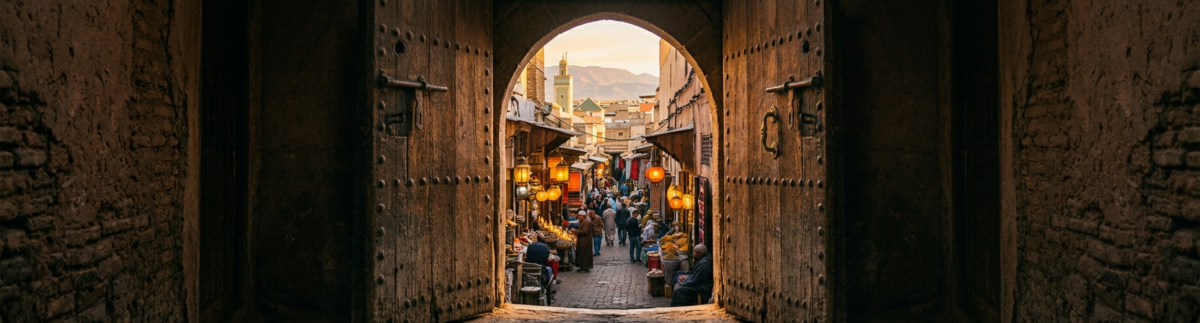
Photo Credit: mwangi gatheca

This is the second part in my series about the philosophy of anger. In this part, I will focus on how to respond to anger. 

When you are angry, you should first figure out why you are angry (that may seem kind of obvious). As you sort through that, you should evaluate how you feel about the fact that you are angry (in particular, what this tells you about what your needs are in life) and how you plan to respond. 

In determining why you are angry, the following questions can help: 

1) What injustice do you perceive, and/or what needs do you feel like are not being met? 

This can often seem like an incredibly easy question to answer, since most manifestations of anger (especially rage anger) make us vividly aware of what we are angry about and what we are lacking. 

But, it can err easily, so we should take this with a form of skepticism. In the heat of the moment, something may clearly seem like the source of our anger, but if we reflect a little more deeply, we may realize more complex issues underlie our feeling, that we rushed to a conclusion about what was happening, and/or that there was something wrong with our initial expectations in the first place. Anger can mislead us away from what truly matters. 

Some forms of anger (especially the passive anger discussed in Part One) often blind us from what is making us angry and why. Such anger may orients us at ourselves only to have to realize that we were not the source of the problem. Rage anger has the opposite problem: it orients us towards external problems, which means that in some situations we need to pause and realize how our own actions may be contributing to the problem. 

2) Is the injustice you perceive real and legitimate? 

Like I already discussed in Part 1, a person can be angry at something that is not actually happening. Our emotions react to what we perceive to be happening, not what is actually happening, so we should pause to reflect on the accuracy of the interpretation of events that is causing us to feel angry. 

Take, for example, a husband who thinks his wife is cheating on when she’s not. Maybe, he interprets whatever she is doing that day as her visiting another sexual partner when she’s just going about a normal day. Anger can lock this husband into his interpretation, putting him in a type of “go” mode by orienting him to do something about it. 

It’s good to take a moment to determine if our anger is clouding our judgement about what is actually happening. Do you even have enough relevant information to know what is going on in the first place? In particular, what information do we have to understand what someone else is doing, and are we jumping to conclusions about their intentions? 

Furthermore, maybe we need to reflect on our underlying expectations. We most often feel angry when some implicit expectation for how something will go does not occur. Sometimes our expectations are reasonable, but sometimes they are not. It can also be useful to reflect on our underlying expectations. 

3) Who is responsible for the injustice, and how responsible actually is the person who I think is responsible? 

Anger often orients us to blame a certain person or group. For externally-oriented rage anger, this tends to be someone else, and for the internally-oriented passive anger, that person tends to be oneself. Either way, reflecting on whether we are jumping too quickly to blame someone is useful. 

4) What should we do to address the injustice? 

This is the final and arguably most important question. Anger often orients us to act to fix the injustice in some way. This is reasonable: injustices are bad, and we should live in a world without that injustice or at least have the harm of what happened repaired as much as possible. If we cannot rectify the injustice, we at least need to develop a way to live with it resiliently. At the same time, anger can push us to act quickly to do something now, and whatever action feels right in the moment may not be the best way to resolve the injustice long-term. 

The question of how to best address an injustice is a tactical question and an incredibly complex tactical question at that. Anger can cause us to narrow our thinking towards whatever specific response we are thinking about in that moment, but we often should pause and think about other types of solutions that may turn out to work better in the long run. For complex societal injustices, there will likely be legitimate debate about the best way to rectify the wrong. 

For example, during the Civil Rights movements, different black leaders and organizations (such as Martin Luther King, Jr and Malcolm X) proposed very different tactics for how black people should best respond to the racial injustices they encountered. Each strategy had their advantages and disadvantages, and thus probably different situations when they were appropriate. It may be better that the debate of how to respond remains open because different black individuals and communities will face different specific circumstances over time that will require them to adapt and figure out how to respond differently. 

In this kind of big debate about how to respond to a major, multifaceted injustice in the world, I think the feeling of anger plays an important part in orienting us to act in the first place and helping us think through whether specific strategic responses feel like they would provide a lasting feeling of peace and justice, but we obviously also need to employ our many other mental faculties to think through what the best ways to address them. 

All these questions may be answered at once or in a different order than the logical, linear order presented here. An emotion like anger may even direct us to process these matters in a nonlinear way. That’s fine, but I think these are all four important questions to think through before carrying out one’s desired response to anger. Even in an emergency situation, one can take a second or two to work through all of them. Anger tends to direct us to act quickly even potentially impulsively, so these questions form “doubt reflexes” that help reground us and think through our actions. 

Now, none of this is meant to imply that anger, or any emotion for that matter is bad. I do not believe that emotions are bad or that “reason” is a better guide for making decisions than emotions. Insofar as these are separable, I think both are incredibly useful psychological tools humans have, and they work best working alongside each other. 

On a practical level when making a decision, it’s helpful to think through a few different lenses or angles, including working through how one feels and what decision feels satisfying emotionally and what decisions seem best from the perspective of a rational calculation. This is both because undergoing multiple decisions making strategies slows us down and slowing down helps people make better decisions, and because these two ways of thinking seem to complement each other well, often picking up on the biases and blind spots from the other way of thinking. 

How Is Complicity for Current Injustices Actually Distributed: The Good Place’s View of the Modern World (Reflection #8 in “The Good Place Miniseries)

I recently rewatched “The Good Place” (spoiler warning), one of my favorite shows from the last ten years, and I noticed so much more about the show the second time around. I decided to write a miniseries analyzing different facets of the show – some complimentary, some critical – as a tribute to one of the most thoughtful and interesting sitcoms on mainstream US television. Here are the previous reflection and next reflection in the series. I hope you enjoy.

In the Good Place, making moral and ethical decisions has become noticeably harder than in the modern world. Over the past 500 years, no human has lived a life worthy in their points system to make it into the Good Place, instead all of them have been damned to the show’s version of hell. Wow, that is quite a statement about the modern world. 

The show’s reason as to why this is happening is that the modern world has grown increasingly complicated, meaning that we must shift how we assess the morality of the decisions humans have to make to navigate this world. For example, Michael describes a boy in the Paleolithic Era picking fresh flowers from the forest and giving them to his mom, an altruistic act that earns him many positive moral points. When an equivalent contemporary boy buys flowers to present to his mom, his generosity gives him some positive credit, but it is offset by the unethical treatment of the worker who farmed the flower, the oil needed to transport it to that shop, and all sorts of other factors.  In defense of the flowers now being negative, the Judge responds that the information is available about, say the plight of the workers on the flower plantations, and the boy chose to buy those flowers that had been farmed in that way and thus to implicate himself into that context. The response from the other characters is that researching everything or completely removing yourself from all instances of injustice while still doing what is needed to survive is unrealistically difficult in the contemporary world. 

This illustrates the fundamental problem the show sees within modern life: the vast interconnectedness makes people reliant on systems that conduct unethical acts in difficult to understand ways around the world. And the individual is held responsible for how their, even seemingly innocent, acts are complicit in these injustices. 

I see an implied primitivism in this view. Past eras of history were simple, much more local. Then when you make a decision, all the necessary thinking is right there in front of you. Modernity has produced interlocking webs that remove an individual from the full context in which the products around them come from, becoming overly complex ethically and morally in the process. This vaguely reminds me of Jean-Jacques Rousseau’s idea of the innocent noble savage or that mass society corrupts individuals, and also Mahatma Gandhi’s view that humans are best off living local lives in their small communities but that mass travel and communication has corrupted humanity as it forced it to scale up. In contrast to many primitivist thinkers, though, the show does not consider a return to “simple society” to be realistic, instead ultimately arguing that the retribution nature of moral criticism is what has got to give. 

As an anthropologist, I view such primitivism as an oversimplification of past periods of human history. Humanity has almost always been interconnected in multilayered connections. The show imagines the past as a kind of simplified ideal that solves some of the complexities they see in today’s world. I would say that individual decisions have always been complex, with full knowledge of the implications of one’s actions across other communities beyond one’s familiarity practically unknowable. 

Second, by arguing that absolutely no one has gotten into The Good Place, the show implies that modern injustices implicate everyone to an overwhelming degree, which flies in the face of how injustice seems unevenly distributed in the world. The show consistently states that no one has gotten into the Good Place for 500 years. So the societal shifts that prevented people from being able to get into the Good Place started 500 years ago. That corresponds rather well to the rise of European colonialism and the start of what many historians call the “modern era” in the 1500s and 1600s (and the very end of the 1400s). European colonialism changed many of the global relationships and power dynamics around the world, resulting in the societal systems that still last in various forms today (such as capitalism, which the current distribution of places in the world are “wealthy” and not, etc.). These systems seem to be exactly what creates the complex social systems that make moral decision-making now overly complicated. 

The show portrays everyone as damned with no distinction of their position within these global forces, despite the fact that people have had very different positions within these systems. For starters, 500 years ago was the start of European’s subjugating large parts of the world and forcing pretty much all other peoples to produce resources for their benefit. Sure, overtime this may have embroiled people born in Europe and maybe even their colonies in implied forms of complicity against injustice outside of their control, but it took hundreds of years for European colonialism to cast its shadow across the entire world. It did not just start 500 years ago. What about people in Oceania who due to geographic isolation had no real contact with Europeans or those implicated in European colonization until the 1700s or 1800s? For example, was everyone from Australia in the 1600s, who had no knowledge of these forces because they did not know about these other parts of the world, subjected to eternal damnation for all time? The show says, “Yes,” when it says that absolutely no human has been able to make it to the Good Place in the last 500 years, even though some of their societies may have looked more like the hunter-gathering society the boy discussed above lived in. This arbitrary caught off of 500 years makes some sense within European history, and in presenting it as such a unilateral caught off, they are eurocentrically presenting European history as the history of all peoples. 

Furthermore, it almost exclusively portrays everyone as beneficiaries of this inevitable system, despite the fact that inequalities distribute decision-making unequally. The victims of modern injustices are just as damned for all time as those who benefit from or at least live in a society that benefits from such injustices. For example, the oppressed farmer who picked the flower in the above example would also be damned for all time. Was this farmer’s decision just as complicit in systems of injustice? 

Consider an example of US slavery to illustrate how absurd that would. During the slave era around the 1830s to 1850s, large swathes of US Americans were complicit in the slave trade. Not just the slave owners who directly owned the slaves, but the (usually) white managers who oversaw the slaves work each day, those who transported the cotton in the South and beyond, made it into shirts (at that time, increasingly this happened in mills in the US North and England), the banks (usually in the North) who organized and traded off of Southern Cotton from the South, and other parts of the world that bought the cheap textiles. Sure, the system was an awful injustice with multiple layers of complicity, but how complicit was your average Black slave? He or she has no (or little) choice in producing the cotton and very limited choices in terms of what they consume as “owned property.” But in the show, that slave received eternal damnation, since their choices evidently also made the world a worse place. 

This view of the modern world in terms of becoming trapped by complex choices where it’s unrealistic to understand and respond properly to how everyday decisions and objects prioritizes the perspective of the privileged beneficiaries of these global forces. It reflects a bias for the experience of US Americans, especially US Americans who are middle class or above, the show’s primary audience. The United States has been a major beneficiary of the global world order, with many parts of the world directly or indirectly committed to producing items to feed our economy, often with unjustly poor wages and conditions. 

Thus, I think the show compellingly demonstrates one way to experience the funneling of vast resources to the United States and other places that primarily benefit from the contemporary global system. In the US, this can feel like an uncertainty over the morality of how the various goods we might buy have arrived on our shelves and the difficulties understanding the ins-and-outs of the vast supply chains necessary to provide us with these cheap goods in the first place. To be clear, they have great insights into what this experience is like, something uncommon for sitcoms to try to tackle. 

At the same time, by universalizing it as the experience of every single human over the last 500 years, it reflects a bias towards a rather limited and privileged perspective on these global forces. The idea that this is just as much a problem for slaves as discussed above, for example, or that their decisions also have made them complicit in unjust systems resulting in their damnation is insulting. The same would also apply to the other forms of injustice and oppression committed around the world. It tangles the beneficiaries and victims of injustices as just as complicit in the system itself. I appreciate that the show tries to tackle the moral complexity of basic life decisions and injustices committed around the world, but I wish it had done so in a way that did not imply that everyone had the same basic experience of these injustices.