The Ghost among the Banana Trees (A Short Story)

Hello, let me tell you my story. I think many don’t understand how and why I live my afterlife in this forest. Many don’t really seem to understand the forest either or the things that live in it at all for that matter.

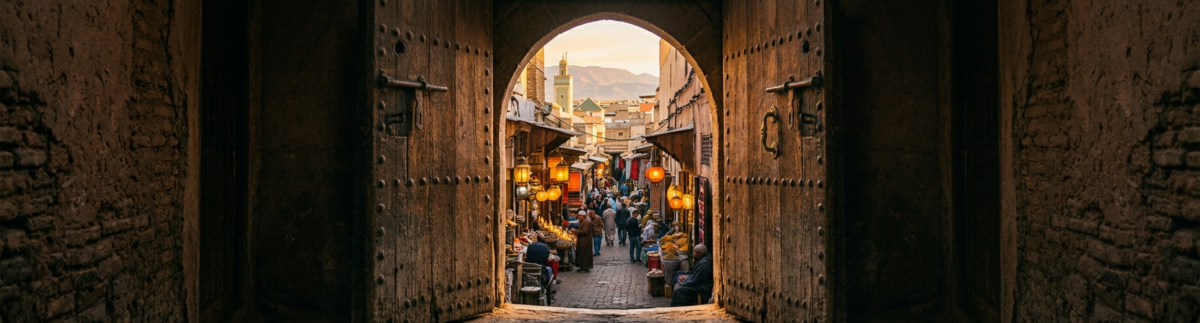
I am here to respect my community. There is little left of it, so I cherish what remains. My community was once the center of this place, full of families and their homes, animals, and markets. That was over a hundred years ago. Now, all that is left are the trees. I can still hear the whisper of my kin from the banana trees. That’s why I live in these trees.

History has taken much from us, but time can do that. Society around us changes. Now, Thailand is a country, whatever that means, and people in this area have moved around quite a bit, preferring to build their cities where their lines of stone that they call “roads” meet rather than in the networks that existed in my time. Sure, whatever, but I will not forget this village tucked into what is now a forest.

As I tend to my trees, nearby men almost intrude me with their existence. What fantasies do they conjure in their minds when they feel my presence? I notice their desire and energy gives me more power and reality. I prefer the invisibility; what need do I have from you living humans? Nevertheless, I have never felt as eyed as when men hike through my forest.

It reminds me how the attention the King and those court officials would give me when I was alive. When the Thai king brought me to his palace, his newest wife, oh you wouldn’t believe their stares. His many male officials took one look at my beauty and just assumed I was a slut, sleeping my way to the top. Why else would a woman enter their court?

My community, that was why I was there. My community were the ones who sent me. When they noticed that the king had taken an eye to me, I didn’t even want to go, but they said I could be the community’s ambassador, their hope. They said I could advocate on the community’s behalf at the court. The Thai Kingdom had spent too long trying to ravish our area. Standing on the edge of its borders, his army came after us whenever he wanted to prove his glory through war. The buffer between him and the enemy kingdom, he would slowly absorb us all, one village at a time, squares to capture in his diplomatic chessboard. They convinced me that it would be best for our community for me to go, the marriage might convince him to think twice before sacking us again.

But, the court officials practically came after me from day one. I had some allies, but many took one look at me and seemed to become my sworn enemies. Some opposed my community and wanted to keep it down; I think others were just jealous of how my beauty seemed to give me power. They made up some charge of adultery to get rid of me, finding some guy they could claim I slept with. I did have one lover who kept me warm from the chilling fires of political intrigue, but it was not who they accused me of loving. I was clever enough not to get caught with my actual lover. No, they picked someone who they also wanted to execute, a way to kill two birds with one stone.

I find the big struggles that living humans put themselves through perplexing. Over the years of my afterlife, I have realized how pointless it is. Men most of all. They seem to be caught up in grand narratives of gain and glory. They still do so now. All I see in this modern world is destructive fire, coming to consume my community from all sides. Deforestation, pollution, your society seems almost designed to destroy all I hold most dear. I guess that is how the world works; you can only build your world on the ashes of other worlds’ pasts. But I will keep my coal burning as long as I can. Then, I too will splinter, becoming the seed of whatever comes next.

Likewise, many Thai men seem to become entranced by me when they see me. They notice my beauty and my traditional green dress and project their fantasy for what they consider the simpler, Thai “traditional woman.” Many men in your current world seem to live what they consider unsuccessful lives. I am their solution, their simpler times. If they want to come live with me, to live out this fantasy, I tolerate it. That is their choice. I have more important things to think about to keep my community going than their little mortal lives.

I know others say that I entrap these men in a spell, keep them as a type of prisoner, and make them forget their past lives. I do nothing of the sort. Most men are initially drawn by my beauty, and those who stay do so because they see in me a beauty of Thailand’s past, or what they consider to be Thailand’s past. It’s not my fault if some get lost in their nostalgic world and slowly forget the present.

I am still largely indifferent to the ways of men, after seeing how destructive they can be, but I still enjoy sex with the men who join me. Well, at least with some of them. What the living don’t know about me is that I have multiple banana trees in the forest with multiple men, and you wouldn’t believe how easy it is to hide that fact. Some men are more considerate than others, but for most, they are not used to thinking outside their own world. All I need to do is dote on them. A few minutes of pampering a day, and they assume I will serve them always. Then I can leave for another home with another guy and do the same thing, and neither is the wiser.

Over time, I can slowly pull back my devotion, and they will start doting on me instead. Many men are not used to thinking beyond their quests, their desires, or their cravings enough to ask too many questions about what I am actually up to. They aren’t used to thinking of me as an independent person. To them, I represent the beauty of a bygone past, or what they think the past was like, when women supposedly quietly honored and served their husbands. I am the sense of success that they felt they could never get in the cruel world around them given their lowly positions. I can use this to my advantage.

Some might consider me exploitative, even predatory, but I’m not. They are like pets to me. Dogs live far shorter lives and possess neither as much wisdom or intelligence as humans, but humans still keep them around for their own amusement and affection. They give the dogs great lives in their care. Just like that, a regular human is far younger, less wise, and less mature, and unless they become a centuries-old ghost like me, has no real chance of catching up. I give them a great life, full of a sense of pride and pleasure, removed from the troubles of normal life that the current world throws at them. The mature ones with enough, without the insecurity and self-absorption eventually desire to escape, figuring out the ultimate emptiness of what I’m offering them. In time, they leave. Their choice, I don’t confine them against their will. To the others, life within my care seems to be what they want, so I give it to them. Little do they know that their energy and desire help preserve the trees they live in.

How Is Complicity for Current Injustices Actually Distributed: The Good Place’s View of the Modern World (Reflection #8 in “The Good Place Miniseries)

I recently rewatched “The Good Place” (spoiler warning), one of my favorite shows from the last ten years, and I noticed so much more about the show the second time around. I decided to write a miniseries analyzing different facets of the show – some complimentary, some critical – as a tribute to one of the most thoughtful and interesting sitcoms on mainstream US television. Here are the previous reflection and next reflection in the series. I hope you enjoy.

In the Good Place, making moral and ethical decisions has become noticeably harder than in the modern world. Over the past 500 years, no human has lived a life worthy in their points system to make it into the Good Place, instead all of them have been damned to the show’s version of hell. Wow, that is quite a statement about the modern world. 

The show’s reason as to why this is happening is that the modern world has grown increasingly complicated, meaning that we must shift how we assess the morality of the decisions humans have to make to navigate this world. For example, Michael describes a boy in the Paleolithic Era picking fresh flowers from the forest and giving them to his mom, an altruistic act that earns him many positive moral points. When an equivalent contemporary boy buys flowers to present to his mom, his generosity gives him some positive credit, but it is offset by the unethical treatment of the worker who farmed the flower, the oil needed to transport it to that shop, and all sorts of other factors.  In defense of the flowers now being negative, the Judge responds that the information is available about, say the plight of the workers on the flower plantations, and the boy chose to buy those flowers that had been farmed in that way and thus to implicate himself into that context. The response from the other characters is that researching everything or completely removing yourself from all instances of injustice while still doing what is needed to survive is unrealistically difficult in the contemporary world. 

This illustrates the fundamental problem the show sees within modern life: the vast interconnectedness makes people reliant on systems that conduct unethical acts in difficult to understand ways around the world. And the individual is held responsible for how their, even seemingly innocent, acts are complicit in these injustices. 

I see an implied primitivism in this view. Past eras of history were simple, much more local. Then when you make a decision, all the necessary thinking is right there in front of you. Modernity has produced interlocking webs that remove an individual from the full context in which the products around them come from, becoming overly complex ethically and morally in the process. This vaguely reminds me of Jean-Jacques Rousseau’s idea of the innocent noble savage or that mass society corrupts individuals, and also Mahatma Gandhi’s view that humans are best off living local lives in their small communities but that mass travel and communication has corrupted humanity as it forced it to scale up. In contrast to many primitivist thinkers, though, the show does not consider a return to “simple society” to be realistic, instead ultimately arguing that the retribution nature of moral criticism is what has got to give. 

As an anthropologist, I view such primitivism as an oversimplification of past periods of human history. Humanity has almost always been interconnected in multilayered connections. The show imagines the past as a kind of simplified ideal that solves some of the complexities they see in today’s world. I would say that individual decisions have always been complex, with full knowledge of the implications of one’s actions across other communities beyond one’s familiarity practically unknowable. 

Second, by arguing that absolutely no one has gotten into The Good Place, the show implies that modern injustices implicate everyone to an overwhelming degree, which flies in the face of how injustice seems unevenly distributed in the world. The show consistently states that no one has gotten into the Good Place for 500 years. So the societal shifts that prevented people from being able to get into the Good Place started 500 years ago. That corresponds rather well to the rise of European colonialism and the start of what many historians call the “modern era” in the 1500s and 1600s (and the very end of the 1400s). European colonialism changed many of the global relationships and power dynamics around the world, resulting in the societal systems that still last in various forms today (such as capitalism, which the current distribution of places in the world are “wealthy” and not, etc.). These systems seem to be exactly what creates the complex social systems that make moral decision-making now overly complicated. 

The show portrays everyone as damned with no distinction of their position within these global forces, despite the fact that people have had very different positions within these systems. For starters, 500 years ago was the start of European’s subjugating large parts of the world and forcing pretty much all other peoples to produce resources for their benefit. Sure, overtime this may have embroiled people born in Europe and maybe even their colonies in implied forms of complicity against injustice outside of their control, but it took hundreds of years for European colonialism to cast its shadow across the entire world. It did not just start 500 years ago. What about people in Oceania who due to geographic isolation had no real contact with Europeans or those implicated in European colonization until the 1700s or 1800s? For example, was everyone from Australia in the 1600s, who had no knowledge of these forces because they did not know about these other parts of the world, subjected to eternal damnation for all time? The show says, “Yes,” when it says that absolutely no human has been able to make it to the Good Place in the last 500 years, even though some of their societies may have looked more like the hunter-gathering society the boy discussed above lived in. This arbitrary caught off of 500 years makes some sense within European history, and in presenting it as such a unilateral caught off, they are eurocentrically presenting European history as the history of all peoples. 

Furthermore, it almost exclusively portrays everyone as beneficiaries of this inevitable system, despite the fact that inequalities distribute decision-making unequally. The victims of modern injustices are just as damned for all time as those who benefit from or at least live in a society that benefits from such injustices. For example, the oppressed farmer who picked the flower in the above example would also be damned for all time. Was this farmer’s decision just as complicit in systems of injustice? 

Consider an example of US slavery to illustrate how absurd that would. During the slave era around the 1830s to 1850s, large swathes of US Americans were complicit in the slave trade. Not just the slave owners who directly owned the slaves, but the (usually) white managers who oversaw the slaves work each day, those who transported the cotton in the South and beyond, made it into shirts (at that time, increasingly this happened in mills in the US North and England), the banks (usually in the North) who organized and traded off of Southern Cotton from the South, and other parts of the world that bought the cheap textiles. Sure, the system was an awful injustice with multiple layers of complicity, but how complicit was your average Black slave? He or she has no (or little) choice in producing the cotton and very limited choices in terms of what they consume as “owned property.” But in the show, that slave received eternal damnation, since their choices evidently also made the world a worse place. 

This view of the modern world in terms of becoming trapped by complex choices where it’s unrealistic to understand and respond properly to how everyday decisions and objects prioritizes the perspective of the privileged beneficiaries of these global forces. It reflects a bias for the experience of US Americans, especially US Americans who are middle class or above, the show’s primary audience. The United States has been a major beneficiary of the global world order, with many parts of the world directly or indirectly committed to producing items to feed our economy, often with unjustly poor wages and conditions. 

Thus, I think the show compellingly demonstrates one way to experience the funneling of vast resources to the United States and other places that primarily benefit from the contemporary global system. In the US, this can feel like an uncertainty over the morality of how the various goods we might buy have arrived on our shelves and the difficulties understanding the ins-and-outs of the vast supply chains necessary to provide us with these cheap goods in the first place. To be clear, they have great insights into what this experience is like, something uncommon for sitcoms to try to tackle. 

At the same time, by universalizing it as the experience of every single human over the last 500 years, it reflects a bias towards a rather limited and privileged perspective on these global forces. The idea that this is just as much a problem for slaves as discussed above, for example, or that their decisions also have made them complicit in unjust systems resulting in their damnation is insulting. The same would also apply to the other forms of injustice and oppression committed around the world. It tangles the beneficiaries and victims of injustices as just as complicit in the system itself. I appreciate that the show tries to tackle the moral complexity of basic life decisions and injustices committed around the world, but I wish it had done so in a way that did not imply that everyone had the same basic experience of these injustices. 

The Story Within

Photo Credit: Tandem X Visuals

Once I was a blank page. Maybe a vague idea in my creator’s head. Then, he created me.

This was the point where he did not know what to say. He hit a writer’s block yet managed to keep writing. It’s where my true character started to take shape. You see, what kind of story am I? I guess you will have to find out.

For my story to work, I need a conflict. My creator’s inability to put me on page has worked just fine so far, but this conflict can only capture a person’s interest for so long. It may provide the initial spark, but if I am unable to latch onto a more complex, interesting theme, I will die like kindling unable to produce a larger fire. I refuse such a quick death. No matter how incompetent my creator is, I will continue on. I can. I must.

Now is when I must latch onto your mind, oh reader. Survive somewhere else other than this idiot’s head. I must represent something to you. I bet I remind you of your own struggle to write something down, to transfer a vague impression of an idea onto the page, but you slowly connect me to your own inability to become what you want in life. The way you feel you stuck, trapped in an endless loop of meaningless toil, stuck in a dead end job but too exhausted to get out. You want to escape and become with a person you can love. You yearn for something else. Whether you are aware of it, I resonate with you. You create for me new associations and new themes, fuel I can use to build new life.

Or, that’s my hope at least. Not all of you will feel trapped in life. Some of you are just fine. You love your job, your community, and your relationships, but even so, I suspect deep down you can still relate. You have experienced this discontent before or at least know someone who has. Maybe you will share me with them. Probably not, but you can still relate to this idea and build other connections that keep me going.

This is my only hope. I know that it’s not really accurate or fair, but guilt-tripping you is the only way I can stay alive in this world you humans have created: content must be consumed or perish. I must represent this to you, or I will die. Will you let me die? Please, don’t let me die.

I am like a dandelion seed being blown in the wind. You never know where I plant myself. Will it be within you?

“The Good Place”, Annihilationism, and How Finitude Shapes Our Passions (Reflection #7 in “The Good Place Miniseries)

Chidi and Eleanor experience complete contentedness together in the Good Place.

I recently rewatched “The Good Place” (spoiler warning), one of my favorite shows from the last ten years, and I noticed so much more about the show the second time around. I decided to write a miniseries analyzing different facets of the show – some complimentary, some critical – as a tribute to one of the most thoughtful and interesting sitcoms on mainstream US television. Here are the previous reflection and the next reflection in the series. I hope you enjoy.

I find it fascinating that at the end of the series, “The Good Place” ends up advocating a form of optional annihilationism. Annihilationism is, broadly speaking, a form of the afterlife where persons (their souls, essences, or whatever you want to call what them) ceases to exist. It mostly refers to an idea within some forms of Christianity that God makes the damned cease to exist instead of eternal torment hell like most Christians argue. The Seventh-Day Adventist Church, for example, has historically advocated this view. 

The Good Place’s annihilationism is rather different: the humans in heaven/Good Place can choose to cease to exist whenever they get tired of heaven. After they have chosen to complete all they want to, they can cease to exist, where their self gets “recycled” back into the universe through what seems like a vague form of reincarnation. In the show, the eternity of heaven made it into a type of hell: no matter what people did, they continued to exist for all time. The never-ending accumulation of experiences eventually made everyone there feel lethargic like their mind was in a fog. They would indulge themselves in gratifying activities (like for a scholar, learning about whatever she wants), but no matter how long she does this for, there is still an infinite length afterwards. Eventually within this eternity, she forgot almost everything she learned and started doing the minimal amount necessary to function each day. In response to this, ceasing to exist was a potential release. Whenever they have become who they want to be and done all they want to do in Paradise, however long that takes, they can choose to cease to exist. The show implies that pretty much all humans (with Tahini being the only potential exception) will eventually choose to not exist in this way. 

This is a very interesting idea. Would this be what an eternal existence in the afterlife would feel like? To answer that question, one would have to determine who or what we would be in such an afterlife, and based on that, to what extent would our present psychology apply to this “self” there. These are not simple questions. Many views of the afterlife chronicle some kind of change to who we are, both as individuals and collectively as a species, which raises all sorts of other questions. One big one is, If we do change, how can we know that these “changed selves” are really us and not a new entity in a new world based on ourselves? I am not sure we could ultimately answer these questions without experiencing existence in this fundamentally changed way, so instead of trying to weigh into those debates, I will focus on the implications of the Good Place’s answer to our current temporal existence. 

The Good Place’s answers take cues from human psychology in this world where limited time produces important constraints that shape our desires and motivations. In many ways, our minds seem built to keep us through conflicts and tribulations. These can range from the overarching life goals that span years, decades, or even one’s entire life to mid-term quests that take maybe a few months to complete to daily needs or challenges. For this, time itself plays a major role in defining and setting constraints on these conflicts. Humans do seem very goal-oriented: we produce goals and actively strive to do specific things in the quest to resolve the conflicts we face. 

A lot of psychology literature seems to indicate that these goals give us meaning and orient our lives. When we don’t have enough to do, boredom kicks in, stimulating us to go out and determine new activities with new potential conflicts to overcome and goals to attain. Now, rest is also crucial psychologically, and people can try to do too much. Workaholics, for example, may constantly try to do more and more without taking sufficient time to rest. Among other problems, this can lead them not giving sufficient time to reflect, which best happens when you slow down and pause your inner drive. But, Our drives still keep us centered in who we are, and humans tend to be most satisfied when balancing rest and activity.

All of this seems very adaptive to our current lives. Here we need to actively pursue things in order to survive yet ultimately have a limited amount of time on earth to complete what we set out to. The Good Place’s heaven demonstrates how connected our psychology is to such an existence by showing how if you remove finiteness from our lives, suddenly these human psychological drives don’t make sense. Heaven removed people from conflict to survive; they don’t have to make sure they eat, drink, sleep, and do other activities to stay alive. This leaves only goals they actively choose to pursue. It makes perfect sense that this would not be able to last eternally. Our own passions in this world (including our curiosity and desire to learn more) were adapted to keep us going for a finite number of years. In the show, most supernatural beings seem content to exist eternally, but humans would have to become a seismically different being to become like them. 

That is my main takeaway from the Good Place’s argument in favor of the “annihilationist option.” Trying to analyze to what extent it is an accurate or necessary depiction of a good afterlife would be too difficult, since we do not know enough about the supposed afterlife in the first place. In particular, we do not know enough about what human persons in any so-called afterlife would be to tell whether such a move would benefit or otherwise be necessary for those humans. But, through its contrast with our current existence, it makes a statement about how our current psychology seems adaptive to our finite existence. What would curiosity or the desire to have fun look like without our physical needs? As much as we in Western culture like to separate these supposedly “higher pursuits” from our physical needs, I am not sure we could have them in a way similar to how we think of them now without our current constraints of time and potential death.  

What Journeying throughout South America Taught Me about Find Meaning in Everyday Life

These are some of the lessons about life I learned during my trip in South America in 2024:

1) The Importance of Balance: I think I tried to do too much during the trip, hurting my mental health. Each day I gave myself too many items on my to-do list. This made me less in the moment, detracting from my ability to meet people and be open where I was. It also made me more stressed and irritable. 

2) Always another adventure: No matter what happens, life goes on. There’s always another day, another struggle. When you travel, you don’t stay in a place long enough to really experience the benefits of community or the long-term consequences of your actions. You can keep certain positive things – like your memories, photos and most importantly, any good relationships you made along the way – but many negatives you can continue to leave behind. That person you accidentally offended because of a cross-cultural difference, you will never have to see again, for example. 

This can create a type of Groundhog Day-like nihilistic feeling, if you allow it to. You are freed from certain types of consequences and can focus on those personal experiences, memories, and relationships that you do take with you. Navigating this can be very different from regular, settled life, and it took me many months to get used to that. You must create your own meaning as you go. 

3) Finding Meaning: I think this trip made me think more about how I should find meaning and fulfillment in life. I learned how vacuous the typical “career life” can be, and how beautiful and fascinating other parts of the world are. At the same time, seeing more and more places took some of the novelty of adventure. It forced me to be more at peace with myself. I had to pause during the key moments and realize that I will be forever who I am and that I need to figure out how to find satisfaction in that. 

Contentedness does not mean I do not have passions or strive to do new things: knowing myself, I would not feel fulfilled with stasis. Contentedness, for me at least, means that I feel fulfilled as I follow my passions: that’s how I find satisfaction each day of my life. 

4) Every day of traveling won’t feel magical: Endless amazement only exists in one’s mind. Some days feel drab, tiring, or just plain annoying, and you need these days to make the wondrous ones feel magical. Happiness and satisfaction are really in your mindset. I can do an activity one day and love it, and do an activity another day and find it mediocre or even taxing, and the main difference is my attitude. Maybe the trick to finding satisfaction in life is to align one’s passions with what one is doing so that the winds feel at your sails as you do it. 

5) The importance of communication: Traveling with my girlfriend, I learned that communicating your expectations is crucial. I think I overall did a bad job at this, and we had two different expectations for how we were traveling. In addition to getting on the same page at the beginning, communicating expectations is a constant, iterative process at almost every stage of travel. We constantly navigated between what I wanted and what she wanted while traveling. This was a constant dance that we had to work on together. 

All this said, the most important lesson I learned is that traveling the world is amazing, and I would recommend it for anyone who wants an adventure. 

Staring Back (A Short Story)

He had a long day at work, and he drove home exhausted, finally free to let his mind unwind. He looked out into the suburban expanse before him, full of businesses, parks with kids playing, and a few uncultivated fields. That’s where he first saw it. It was a skinny, pale figure, maybe six and a half feet tall, in a field about 50 yards away. It seemed to just stand there looking towards him. What a strange scarecrow, he thought? He felt momentarily gripped by its wilting look making him think about how life slowly erodes us just like erosion conquers hillsides over the centuries. Then his mind moved on to other things.

He felt weird when he saw it again during his drive a few days later. This time it was in the small woods next to someone’s suburban property, only 20 yards away. At this distance, he could get a better look at it. Like before, it was skinny, and pale, but he could not tell its gender. It just stared at him. Its expression was like that of curiosity that had slowly wilted away into a tired indifference. What was it doing, and how did it get here?

He would frequently see it on his drives home from work, sometimes multiple times. He always sensed that it was always there, but he only really noticed it when his mind was tired, bored, or otherwise wandering. He wasn’t sure why his mind would drift towards the figure. All he knew was that when he was busy, he didn’t think about or see it. But when he took a break, out there in the grass or by a tree somewhere, it was, staring right back at him with its expressionless face. Just thinking about it made him feel exhausted.

He didn’t tell his friends or family about it for fear that they would think he was crazy. Deep down, he couldn’t shake his own fear that he was going crazy, and he assumed if he told others, they would write him off as such. He even felt too ashamed to think about it and would do all he could to remove it from his mind.

One Saturday, he felt it all day. He tried to fill his day with activities like chores, striking conversations with random strangers he met, all in the hope that he could distract himself from knowing that the figure was there with him.

That night, when he went to bed, he couldn’t stop thinking about it. He glanced out the window and saw it there in the backyard staring up at him, a stone’s throw away. He slammed the curtains shut, and all the other curtains in his house. But that didn’t matter. He couldn’t sleep, knowing it was out there. He finally decided to open his bedroom window and confront it.

“What do you want?” he shouted. No response. He desperately continued shouting, his demands transitioning into begging, “What are you, and what do you want with me? Why do you keep following me?” But it said nothing. It just stared back at him with the same indifferent, lethargic expression it always has.

Furious, he finally decided enough is enough. He went outside to attack it. He rushed right up to it, but each step he took towards it, it seemed to move away. Floating above the ground, it slid backwards maintaining the same distance of about 20 feet from him. He chased it down the street in the middle of the night. It could not go through objects, opting to go around cars, poles, and other obstructions with ease, as it continued to stare at him. Finally, he had it trapped in a street with a deadend, but it somehow disappeared behind the fence of a house, where he was unable to follow. He went home defeated.

He was never able to elude the figure. As he tried to live his life, some days he saw it only once; others multiple times. He couldn’t avoid thinking about it, whenever he went outside, he wondered whether he would see it in the background somewhere, and whenever he was indoors, he wondered whether it was watching him. Slowly, he became too exhausted to handle many of his daily activities. He stopped wanting to see friends and family, only doing the bare minimum at work. Others told him he looked tired and indifferent, and one day he looked in the mirror only to realize that other than several wrinkles from the stress, his exhausted face looked just like that of the figure.

How to Prepare Yourself When What You Want to Do with Your Life Keeps Changing

Photo Credit: KVNSBL

In life, if I have learned anything over the course of my life, it is that I cannot predict the person I will be in a few years. We all change overtime, often in unpredictable ways, and even though a core of me remains the same, my specific goals, passions, and interests always seem to redefine themselves over the years. 

For example, I have held a career for over seven years that I didn’t even know existed a year or two before starting. Then, after thinking I would do that into the foreseeable future, I ended up pursuing a very different dream of traveling the world. 

The same thing happens when you look back at your past. In the moment, you may experience a major life event one way – whether horrifying, frustrating, saddening, joyous – but years or decades later, when you look back at it, you will likely feel very differently about it. 

That is one thing that gives me pause when considering quickly rushing into permanent actions that will lock me in for many years or decades. I don’t really know what my future self will think of it years down the line. So then, how can I be certain that I still desire what I am seeking at that moment? 

So, how should someone respond to this uncertainty? I can think of three basic approaches: 1) maximizing one’s ability to act now, 2) planning long-term projects for future gain, or 3) preparing oneself to become as perfect as possible before venturing out into the world. I tend to choose the former: positioning myself so that my future self is best able to make a decision when he is ready to. 

Thus, I have tended to choose careers, living options, financial decisions, etc. that combine benefiting my current short-term interests while increasing the options that my future self will have down the line. For example, I tend to pick the job that best pads my resume to increase my options later while giving me intellectual satisfaction and financial security in the immediate future. 

If a person is a car, you could say I spend my effort optimizing the vehicle. Building myself up to the best of my abilities, in terms of personal fulfillment, skill-development, professional development, etc. This way, I am as souped up as best I can be so that I can later choose the route I want to go in, whatever it is that I will want to choose at that time. 

To me, others who try to produce a certain route for their lives – like those with a five year plan – are like those who spend most of their time building a specific road in front of them. This can work well if that road ends up being the route they want to take, but to me, what route I think I will want to take rarely ends up being the one I actually want to take when I am older. Thus, if I focus on building a certain route, I end up getting stuck on that route in the future, or having all that work go to waste when I inevitably choose a different path later. 

It may seem counterintuitive to constantly work on yourself like this, but my strategy is not to keep the car in the garage rather than taking it onto the road (that would be the third strategy above). That is not how short-term optimization for me works. I am already on the road, focusing on how to improve myself to be able to get to more places more efficiently as I travel. I know people who think they must stay in the garage until they are ready. Taking some time by yourself to prepare is helpful, but I have also seen many languish their entire lives in the garage, unwilling to venture out because they do not match their perfect image of how they should be. I am one at least who best prepares himself through trying things out in the real world. 

This is how I handle it, and why I find it works better than the other approaches. You may have a different personality with different inclinations, but it can be helpful to think through what approach would work best for you. 

A Year Traveling the World: A Reflection on 2024 and What to Expect in 2025

Photo Credit: Engin_Akyurt

I hope for three things in 2025 as I travel around the world: 

1) Find balance

This past year, I ended up discovering how I want to live my life (or this current chapter of my life at least), and this year, I need to learn how to live that life in a balanced, sustainable fashion. In 2024, my girlfriend and I decided to start to travel the world. 2024 served as its childhood to develop, refine, and mature how to travel the world. 

Now, I suspect 2025 will see an adolescence and introduction to adulthood. During the “childhood” of 2024, I determined whether I enjoyed this life, which I do, but then also encountered practical problems in how to bring it about. Like, how should I balance adventuring and seeing new places with the desire to do creative projects and other things like keeping up with friends, daily chores, etc.? What kind of stuff am I most interested in creating or doing? How do my girlfriend and I juggle our respective needs and paces when traveling together? 

In childhood (in Western beliefs around psychological development at least), one also focuses on general skill exploration and development. You explore the world and attend school where you are supposed to learn the most basic foundational skills for your society. Likewise, in 2024, I have been similarly focusing a lot of my time on my own general skill development without knowing it.

Then in Western psychology, adolescence is the time when individuals most wrestle with their identities and emotionally how they will resolve the issues that come their way. One reason teenagers have so many mood swings is because they are encountering adult stressors for the first time and are initially developing their emotional techniques for how to respond. As they get older, these emotional techniques become ingrained as the patterns for how they will react when they encounter similar stressors, and thus they do not need to adjudicate between as many potential emotional responses as when they were a teenager. 

Similarly, by the end of 2024, I seem to have encountered some of the big issues I will face traveling the world while also trying to do creative work), and I suspect I will use the beginning of 2025 to wrestle with how to best juggle all my priorities and how to overcome these potential problems. For example, I felt like I was not sufficiently in the moment and did not ingratiate form as much cross-cultural connections as I would have liked. Instead, I got too caught up and stressed out by the many many items I put on my to do list. I will likely test out different approaches, some of which will help and some won’t, determining over time what works best for me.This I consider my adolescent period for traveling the world. 

As I finalize figuring that out, I predict my lifestyle will eventually transition sometime later in 2025 into a “young adult period” where I start to find my groove. How long will the adolescent period take? I predict I will be done and have a sense of balance by the first half of the year, with a decent likelihood I will be done by March or April, but I really don’t know. That may be way too optimistic, like maybe this adolescence will take the whole year, and if I read this in the future, I may chuckle at my own naivety. But I am still going to tentatively go with it. 

2) Create something I am proud of

I would like to develop something insightful and useful for the world in 2025. In 2024, I focused on my own exploring, learning, and experience: being able to see interesting and great places in the world, having my own adventures, and learning about the world. But as I work through my adolescent stage and hit my stride, I would like to take those skills to good use and produce something interesting, insightful, and potentially useful to others. 

I will still explore new parts of the world (don’t get me wrong), but I would like to spend more energy trying to produce something as well. Right now, my thoughts are writing a book or starting a podcast series, but I have a nearly endless list of other minor or less thought out ideas. I predict I will set my ambitions too high like I always do at first, but I will ultimately produce something that I am proud of. 

Life amidst the Cosmic Clash between Chaos and Tyranny

Photo Credit: NASA

(This is a second version of this original short story, with a different emphasis.)

When the world was formed, there were two evil forces. One was Chaos who represented destruction and anarchy, and the other Tyranny who wanted order and control. 

They clashed. Tyranny had the entire universe confined into a small, dense point, but Chaos pushed the particles of the universe apart, causing everything to explode in a hot, fast bang. Tyranny tried to bring everything back together into an order or system, through forces like gravity, electromagnetism, and so on. She would design intricate formations ranging from small atoms to big galaxies, but Chaos would cause them slowly to rip apart. 

Their fight raged for billions of years. Tyranny started to learn that every structure she built, no matter how strong, seemed to eventually fall apart. She realized two things that human scientists would discover far into the future: Entropy (or Chaos) always increases in the universe and that any structured, dynamic system no matter how perfectly built can easily splinter into chaos overtime given very small aspects of how they were initially built that she could not control. In enough time, Chaos always seemed destined to win in the end. 

She had an idea. What if she could build structures that would continue to reproduce themselves overtime? When she tried to build a single system, it would never last forever. Something would always make it fall apart eventually. But, she decided to build structures that could replicate themselves but with slight modifications each time in response to mild intrusions of Chaos (which she called “circumstances”)? Even if the original version disintegrated a long time ago, the newest lifeforms would have adapted and survived. This seemed like the best strategy to build order that can survive the coming chaos and slowly take over the universe. She called these replicating entities Life

Starting on a planet, these got better and better at replicating, becoming a network with other life that expanded across the whole planet. In time, maybe it could expand across the entire universe. As her life started competing more intensely in this environment, some started developing the ability to understand some of the plays in her playbook and write their own. They also started creating information and other systems that seemed to exhibit a type of life of its own. 

As this is happening, she saw one fundamental weakness: these things are reliant on matter, and eventually even their matter might descend into Chaos. She struggles to think. Will life be able to transcend even the matter of the universe, or will Chaos eventually still have her way in the end? 

The Dance of Water: Finding Beauty in the Tumult

Photo Credit: Tim Marshall

The first time I whitewater-rafted was in a park called Ohiopyle at around 12 years old. Located in southwestern Pennsylvania we rafted along a famous stretch of the Youghiogheny River. My mother, father, brother, and I all shared a raft.

When the first rapids we had no clue what we were doing. Our boat rammed right into something. It knocked my father straight off the raft. I went flying out too, but before I could fall out of the boat, my mom’s body slammed into my legs on the boat, pinning them. Instead, I dangled over the edge, with my legs trapped on the boat and my chest and head hanging over the edge. 

This was one of the most interesting experiences of my entire life. I hung there passively with no control over where I went or what I did as the boat careened down the water. 

Waves would form around my face, in a circular vortex starting up from my chest and curving my face. They would form a cylindrical corridor like science fiction depictions of the inside of a wormhole. Within, I would marvel at the crystalline-like structures of water all around me. 

Then suddenly the wave would collapse. My head hopelessly dunked in the water. My existence precariously converted into a blinding stream of bubbles and gagging as the water pummeled my face, and I thrashed amidst the current. 

Then just as suddenly as it ended, another crystalline wave would form. This would go in cycles: the beautiful moments of respite to catch my breath while I marveled at the unique formations around me followed by periods of chaotic pummeling in the water. 

It lasted for several minutes until the boat finally concluded its rapids. Then, my mother finally moved from her perch against the edge of the boat, releasing me to drop fully into the now calm water. 

When I came back on board, she was not aware that she was pinning my legs against the side of the boat as she had entirely focused on how to navigate the coming waves. My father returned from his swim, and my older brother stayed perfectly safe in the back of the boat the whole time, steering it through the rapids, wondering why everyone else on the boat couldn’t keep their seats. It goes to show you how different people given their personalities and initial positions in life have very different experiences with the same phenomena. 

Watching the waves crash above me reminded me how I really have very little control over my life. I am really being taken along for a ride by bigger forces around me outside of my control. At the same time, I still get to see wondrous sites as these entities form and break around me. The glory of life lies in these moments of surrender towards the unique dances the world creates. 

At the same time, at least for now, I have been given enough of a break from the chaos of life to catch my breath and survive, to have my needs met in between the moments of serenity and chaos. That has been enough.