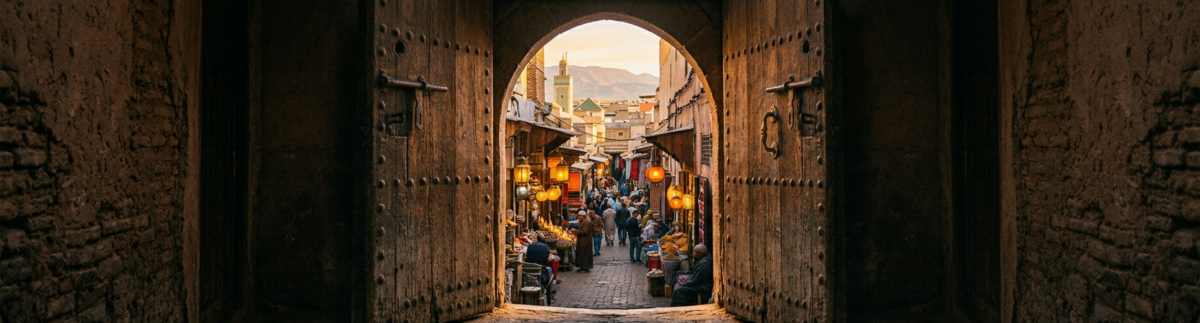
Fleeing the Arena: Why One Ukrainian Chose Exile Over War

Photo Credit: Jade Koroliuk

I have not been able to write for a while because of my internet connection, but I am back now. Today, I am going straight into it with a Life Snippet of a Ukrainian man I spoke with in Thailand. 

He gave me a totally different perspective on Ukrainian society since the war. I do not have enough knowledge of Ukrainian society (as well as Russian and other relevant nearby societies) to determine whether I agree or disagree with his take, but I found his perspective interesting because it forced me to wrestle with my underlying assumptions of the place based on the Pro-Ukrainian media common in the US. Friends I have shown early drafts of this to from places that tend towards a Pro-Russian bias told me it caused them to question their own assumptions as well, leaving them unsettled in a way that forced them to grow. 

At the very least, he raises serious questions about the usefulness of suffering, war, and violence. I hope his story also helps you work through your own perspective in a unique way. (For a second perspective on the war in Ukraine, see this interview I did with an Ukrainian couple while visiting Borneo, Malaysia.)

—

The man is a young adult from Kiev, but he fled Ukraine and is now traveling the world. He illegally crossed the border into Romania (paying $12,000 to be smuggled across by a group that offers this service for many Ukrainians, especially Ukrainian men who do not want to be forcibly conscripted to fight). 

He left Ukraine because he got sick of the corruption. He said corruption has been widespread in Ukraine for decades, and even though the current war with Russia distracted people from it, it’s still rampant. He thinks Zelensky is a corrupt and bad leader. 

He also was concerned about forced conscriptions, telling stories of government vehicles driving around the city looking for young men to grab and enlist on the spot. He said there are two types of Ukrainians: patriotic zealots who stay in Ukraine to fight and those who flee because they are sick of the place. Most of the latter settle in different parts of Europe where they work, especially as construction workers.  

He works as a product manager for an online gambling company, something that allows him to work remotely, so he has been able to travel the world.  He dislikes working for a gambling company and does not like the work of a product manager, but it gives him an income and the flexibility to work wherever. Ultimately, he wants to make video games as a designer and animator. 

He has been traveling throughout Southeast Asia, spending several months in Indonesia and Vietnam. Now, he is in Thailand for three months where I met him. (The other Ukrainian couple I interviewed also worked in tech and were traveling throughout Southeast Asia. In contrast to the Ukrainian immigrants who work in construction or other blue collar fields in Europe, their education and expertise in tech seems to give them more flexibility in where they work and more disposable income to travel.) 

He plans to go back to Europe for a little bit and then travel to Japan where he hopes he can apply for some kind of asylum or refugee status to allow him to live there permanently. He thinks Japan is unlikely to grant it to him, but he will try anyways. His Japanese is at JLPT N4, enough for basic conversations, and he needs to improve it to be successful. 

He doesn’t like European cultures, preferring East Asian cultures. He finds them more spiritual, deep, and profound, especially places rooted in Buddhism and the idea of karma. To him, the faith instills a positive spirituality leading to joy and wellbeing. He sees Europe as more secular and superficial. 

For him, Russian and Ukrainian cultures are secular just like European cultures, but the romanticization of suffering lies at the foundation of the form of Christianity there. Since the war, Ukraine has become an arena for people interested in glorifying suffering. He thinks this leads to a type of spiritual degeneracy that he strongly disagrees with. 

For him, Russia, Ukraine, and also Belarus are fundamentally similar cultures. If Ukraine hadn’t decided to Europeanize, it would have ended up like Belarus, and he considers all three countries to be awful. Each is built on decades of conflict and misery. He also does not think there will be an actual winner of this war. If one side does manage to win, the powerful countries in the world will create an excuse for a new conflict anyways. 

Ukraine for him has become a kind of masochistic society, reveling in the suffering of war and glory of defending freedom. Through this, those who romanticize suffering can endlessly live it out. I sense that he looks to Buddhism and Buddhist countries in Asia as a potential alternative that he sees as embracing peace and love instead of suffering and its resulting violence. 

Because of all this, there is nothing left for him in Ukraine.

What Journeying throughout South America Taught Me about Find Meaning in Everyday Life

These are some of the lessons about life I learned during my trip in South America in 2024:

1) The Importance of Balance: I think I tried to do too much during the trip, hurting my mental health. Each day I gave myself too many items on my to-do list. This made me less in the moment, detracting from my ability to meet people and be open where I was. It also made me more stressed and irritable. 

2) Always another adventure: No matter what happens, life goes on. There’s always another day, another struggle. When you travel, you don’t stay in a place long enough to really experience the benefits of community or the long-term consequences of your actions. You can keep certain positive things – like your memories, photos and most importantly, any good relationships you made along the way – but many negatives you can continue to leave behind. That person you accidentally offended because of a cross-cultural difference, you will never have to see again, for example. 

This can create a type of Groundhog Day-like nihilistic feeling, if you allow it to. You are freed from certain types of consequences and can focus on those personal experiences, memories, and relationships that you do take with you. Navigating this can be very different from regular, settled life, and it took me many months to get used to that. You must create your own meaning as you go. 

3) Finding Meaning: I think this trip made me think more about how I should find meaning and fulfillment in life. I learned how vacuous the typical “career life” can be, and how beautiful and fascinating other parts of the world are. At the same time, seeing more and more places took some of the novelty of adventure. It forced me to be more at peace with myself. I had to pause during the key moments and realize that I will be forever who I am and that I need to figure out how to find satisfaction in that. 

Contentedness does not mean I do not have passions or strive to do new things: knowing myself, I would not feel fulfilled with stasis. Contentedness, for me at least, means that I feel fulfilled as I follow my passions: that’s how I find satisfaction each day of my life. 

4) Every day of traveling won’t feel magical: Endless amazement only exists in one’s mind. Some days feel drab, tiring, or just plain annoying, and you need these days to make the wondrous ones feel magical. Happiness and satisfaction are really in your mindset. I can do an activity one day and love it, and do an activity another day and find it mediocre or even taxing, and the main difference is my attitude. Maybe the trick to finding satisfaction in life is to align one’s passions with what one is doing so that the winds feel at your sails as you do it. 

5) The importance of communication: Traveling with my girlfriend, I learned that communicating your expectations is crucial. I think I overall did a bad job at this, and we had two different expectations for how we were traveling. In addition to getting on the same page at the beginning, communicating expectations is a constant, iterative process at almost every stage of travel. We constantly navigated between what I wanted and what she wanted while traveling. This was a constant dance that we had to work on together. 

All this said, the most important lesson I learned is that traveling the world is amazing, and I would recommend it for anyone who wants an adventure. 

Life, Death, and the Dance of Memory (A Short Story)

Photo Credit: CDD20

Title: Life, Death, and the Dance of Memory

There was once a society that discovered how to become immortal. They lived their lives for decades, but as the decades transitioned into centuries, it did not feel the same. They lost their wonder at new things. The first time they experienced something it was fresh and novel, but overtime, they started to realize how cyclical the universe actually was. It just endlessly repeated itself every several decades or centuries in a cycle.

Some tried to experience difference by having children. This was strictly forbidden in their immortal society to keep the population down. The children provided a sense of newness. They could vicariously see the world afresh through their children’s eyes, which gave them a type of innovation that they craved.

This, though, eventually began to fade: after so many new generations, the experience of begetting another round of children becomes routine and boring. Having children became another thing they got used to.

Others tried building their own business empire, but that too did not last. One can only build or expand so much before one reaches the limit of one’s space, and the vitality of competing against other businesses in the industry also starts to fade.

Others tried to create their own art, but creativity can also only go so far. After one has explored one’s style to the furthest reaches and delved into other styles one might be potentially interested in, art too loses its novelty

So, the people of this society made a bold decision. They decided to learn to forget. Every few decades – 8 decades seemed like the best number – they would induce the ability to forget.

That way, they could relearn the world as a new space each time. They cascaded which decades people forgot so that each decade there was always still a knowing group who could train the ones who had forgotten. Thus, the community could maintain itself over multiple generations of forgettings.

Through this, each experienced the wonder of the universe without seeing its novelty fade into the lethargy of endless iteration.